


The House of Rothschild: From Frankfurt’s Ghetto to the Pinnacle of Global Finance
The name Rothschild has long been synonymous with immense wealth, banking prestige, and not a little mystique. For over two centuries, the Rothschild family’s financial empire has spanned continents and shaped nations, evolving from humble beginnings into a powerhouse of global finance. Their story is one of ambition and ingenuity – a journey that winds from the cramped Jewish ghetto of 18th-century Frankfurt through the courts of kings and emperors, the battlefields of the Napoleonic Wars, and the boardrooms of modern high finance. It’s a saga populated by brilliant financiers, sprawling mansions, royal titles, and enduring legends. It’s also a story often clouded by conspiracy theories and exaggerations that the facts do not support. In this Investment Compass Series feature, we delve into the real history of the Rothschilds – an engaging narrative of how one family built a banking dynasty, helped finance pivotal moments in history, and became a byword for financial influence, all while separating truth from the myths that have sprung up around them.
Origins of a Banking Dynasty
In the mid-18th century, in a narrow lane of Frankfurt’s Jewish quarter (the Judengasse), a child was born who would lay the foundations of an unrivaled banking dynasty. Mayer Amschel Rothschild, born in 1744, grew up in modest circumstances in Frankfurt am Main. His family name “Rothschild” came from the rote Schild – the “red shield” – that hung above the entrance of his ancestors’ house. Originally, young Mayer Amschel was destined for the rabbinate, but fate had other plans. The early death of his parents pushed him into the world of commerce; as a teenager he apprenticed at a banking house in Hanover. In those years, he gained valuable experience in trade and finance that would serve him well when he eventually returned to Frankfurt to establish his own small business as a dealer in coins and currency.
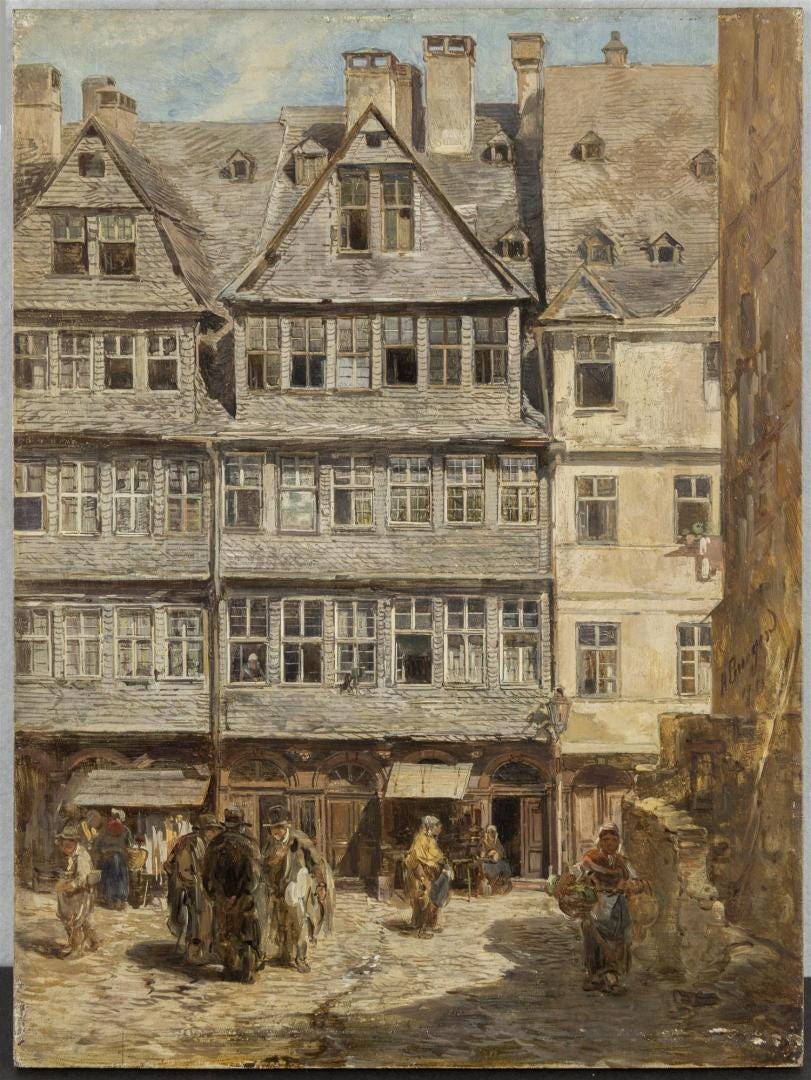
Mayer Amschel’s big break came through a connection with the aristocracy. By the 1760s, he found patronage as a court agent for Prince William of Hesse-Kassel, one of the wealthiest nobles in Europe. Handling investments and procuring rare coins for the Prince, Mayer earned both income and trust. He soon set a pattern that would define the Rothschild approach for generations: do business with reigning houses by preference, and expand the family enterprise through a network of sons. Mayer and his wife Gutle had five sons who survived into adulthood, and Mayer saw in them the key to multiplying his business’s reach. As he nurtured his finance house in Frankfurt, he prepared each son to take on a strategic role in a different major European financial center. This was an innovative strategy – essentially creating an international banking network held together by family ties and mutual trust.
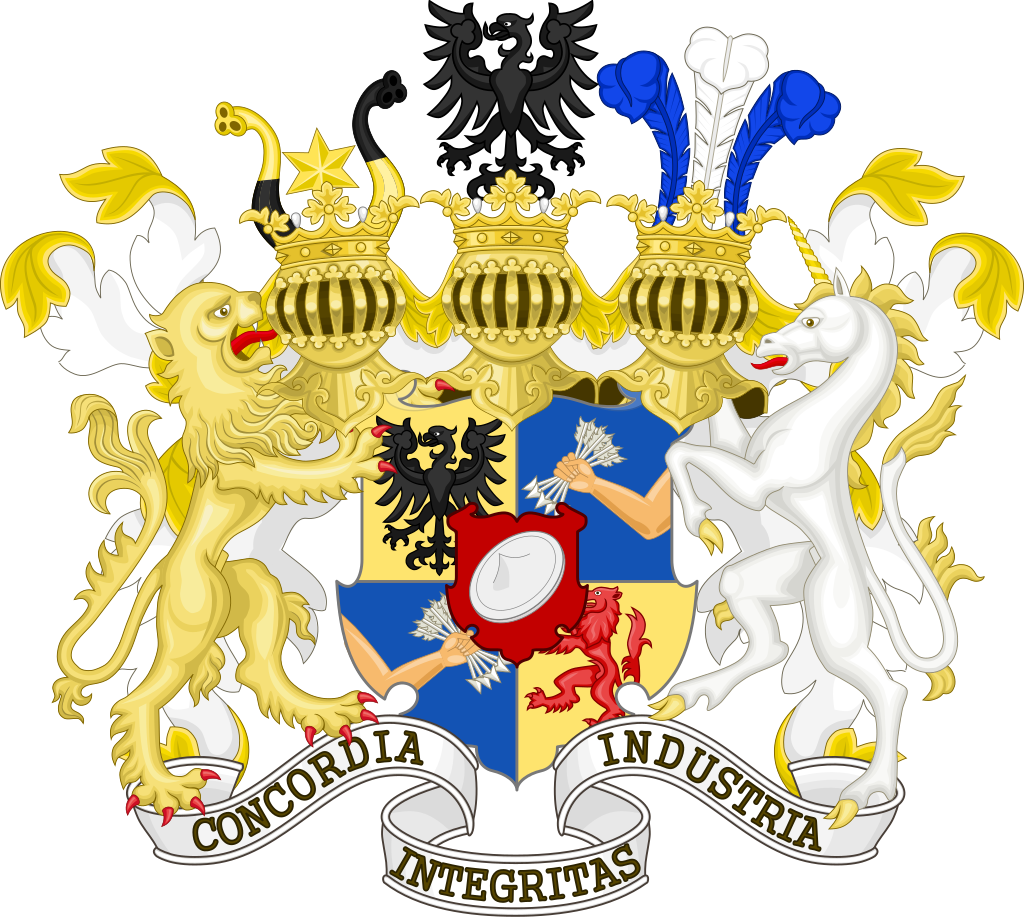
By the turn of the 19th century, Mayer Amschel Rothschild’s plan was coming to fruition. He dispatched his sons to the hubs of European commerce: Amschel remained with him in Frankfurt to manage the home bank; Salomon established a branch in Vienna; Nathan went to the bustling economic capital of London; Karl (Calmann) set up in Naples; and the youngest, Jacob (James), moved to Paris. Thus, by the 1810s, the Rothschilds had planted family-run banks in five cities, forming an unparalleled web of financial operations across Europe. The Rothschild coat of arms would later famously feature five interconnected arrows, symbolizing these five brothers and their unity of purpose. At the outset, their businesses dealt not only in banking but also in trade of coins, precious goods, and commodities. However, Europe was entering an age of upheaval and war – an age that would present the Rothschilds with extraordinary challenges and opportunities.
War, Strategy, and the Rise of the Rothschilds
As the Napoleonic Wars engulfed Europe in the early 1800s, the Rothschild brothers found themselves uniquely positioned to thrive amid the chaos. Wars are expensive, and governments in Britain and across the continent were in dire need of funds to pay armies and allies. Mayer and his sons deftly turned conflict into opportunity: they became key financiers to princes and states, extending loans to finance war efforts. Not only did they lend money, but they also traded in crucial wartime commodities – everything from wheat and cotton to arms – and even engaged in smuggling, using their network to circumvent Napoleon’s continental blockade that sought to shut British goods out of Europe. In an age before electronic communications, the far-flung Rothschild courier network proved to be one of their greatest assets. The brothers maintained an intricate system of trusted messengers and shipping agents crisscrossing Europe with correspondence, gold, and intelligence. Through this network, they could move money (and information) faster than any official channels.
By the war’s climactic years, Nathan Mayer Rothschild – the third son, based in London – emerged as one of the most crucial bankers of the British war effort. From 1813 to 1815, Nathan almost single-handedly coordinated the financing that kept Britain and its allies supplied in the fight against Napoleon. He arranged huge loans and transactions, including the shipment of gold bullion to pay the Duke of Wellington’s troops fighting in Spain and France. In 1815 alone (the year of the Battle of Waterloo), the Rothschilds provided the British and their continental allies nearly £10 million in subsidies – an astronomical sum, equivalent to about £850 million in today’s money. This feat – marshaling vast funds across borders in the midst of war – showcased the unprecedented reach of the family’s financial network.
The Rothschild couriers did more than carry money; they also carried news. In an era when a single day’s advantage in information could yield a fortune (or save one), Nathan Rothschild’s communications network gave him a vital edge. One famous anecdote illustrates this advantage: in June 1815, Nathan’s agents managed to deliver to him in London the news of Wellington’s victory over Napoleon at Waterloo, a full day before the government’s official messengers arrived. Legend has it that Nathan, armed with this early knowledge, hurried to the stock exchange and executed a cunning bond trade that made him a colossal profit, cementing the family’s fortune. Indeed, over the years this story has been told and retold, growing into a centerpiece of Rothschild lore. However, what actually happened is both more prosaic and more interesting than the myth. In reality, Nathan Rothschild did receive early news of the victory, but he did not use it to stage a deceitful market coup. Historical research shows that Nathan promptly informed the British government of the outcome at Waterloo rather than first exploiting it for personal gain. The sensational tale of him furtively profiting off insider knowledge was a later embellishment – a fiction propagated by popular accounts (and even an influential 1840s French pamphlet) that cast the Rothschilds as almost supernaturally cunning financiers. In truth, the Rothschilds did profit handsomely in the post-Waterloo period – but through more legitimate means. Anticipating that a lasting peace would lift the prices of British government bonds, Nathan boldly bought up huge positions in those bonds after Waterloo. He was proved right: as Britain’s post-war economy stabilized, government securities rallied, and by 1817 Nathan was able to sell his bonds at a roughly 40% profit. It was a masterstroke of financial foresight (one historian called it “one of the most audacious moves in financial history”), and it exemplified how the family’s keen understanding of politics and markets could translate into immense gain.
The Rothschilds emerged from the Napoleonic Wars as the preeminent bankers of Europe. With war winnings and savvy investments, their fortunes skyrocketed. Nathan’s London bank – N. M. Rothschild & Sons, founded in 1811 – became the cornerstone of a financial empire. The brothers had learned to work as a coordinated multinational team: even as they maintained separate banks in Frankfurt, London, Paris, Vienna, and Naples, they acted in concert, sharing information and dividing opportunities. This tight-knit collaboration was something new in the financial world. Their trans-European family partnership allowed the Rothschilds to harness a continent’s worth of opportunities while diversifying away many of the risks that earlier court bankers had faced. As one observer noted at the time, unlike the wealthy financiers of previous eras who could be ruined or exiled by a capricious monarch, the Rothschilds’ wealth was so mobile and geographically dispersed – held in stocks, bonds, and bills circulating across countries – that it was largely beyond the reach of any single government. This resilience made the family an even more attractive ally to governments in need of capital.
Bankers to the World: Expansion During the 19th Century
With the guns of the Napoleonic Wars now silenced, Europe entered an era of industrious peace and rapid development – and the Rothschild family shifted their financial might from cannons to commerce. The decades after 1815 saw the Rothschild banks deepen their involvement in government finance and industrial projects that were transforming the modern world. They had already made a name underwriting government bonds (for example, Nathan’s firm arranged a £5 million loan to Prussia in 1818), and this line of business only grew. The Rothschilds became the go-to house for sovereign loans; they brokered capital for kings and nations from Britain to Austria, from Brazil to the United States. In fact, the family’s London house was so influential that in 1825 it was able to step in to avert a crisis at the Bank of England: during a liquidity crunch that year, Nathan Rothschild supplied the central bank with enough gold bullion to shore up its reserves and calm the panic – an early example of a private bank acting as lender of last resort.
The family’s international structure also allowed them to play a pivotal role in facilitating cross-border payments that greased the wheels of diplomacy and empire. A remarkable case came in the 1820s: Latin America was in turmoil with new nations emerging from colonial revolutions, and Brazil was negotiating independence from Portugal. The Rothschild network helped broker the complex financial settlement for Brazilian independence. In 1825, N. M. Rothschild & Sons in London raised £2 million for the new Empire of Brazil – money that was partly used to compensate Portugal and secure recognition of Brazil’s sovereignty. In essence, the Rothschilds acted as intermediaries between a former colony and its old imperial master, underpinning a new nation’s birth with British capital. A few years earlier, they had also quietly helped with an initial £1 million loan in 1824, showing how the brothers could collaborate behind the scenes on international deals. Such transactions solidified the Rothschild reputation as the bankers who could move money across the world and get difficult deals done.
As the 19th century progressed, the Rothschilds were at the forefront of financing the infrastructure of the Industrial Revolution. Railroads were the high-tech investment of the era, analogous to what high-speed internet or electric cars might be in our time, and the Rothschild banks poured funds into railway projects across Europe and beyond. In France, James (Jakob) de Rothschild’s bank financed major lines like the Chemin de Fer du Nord, helping knit the country with iron rails. In Austria, Salomon’s bank funded the Northern Railway and other lines. In Britain, the Rothschilds invested in everything from rail networks to new industrial ventures. By diversifying into industry, mining, and transportation, the family both supported and profited from Europe’s explosive economic growth. They took stakes in burgeoning enterprises: metals, coal, steamships, and later even oil. An example of their reach is the Rio Tinto mining company – in the 1870s, the Rothschilds (in partnership with other investors) acquired the Rio Tinto mines in Spain, modernized them, and eventually gained full control, turning Rio Tinto into one of the world’s leading mining conglomerates. In Africa, they backed the ventures of Cecil Rhodes – lending support that helped found the De Beers diamond company and the colony of Rhodesia (present-day Zimbabwe/Zambia). From 1887 onward, the British and French Rothschild houses were the largest shareholders in De Beers, dominating the diamond trade.
The Rothschilds also remained deeply involved in high-level state finance throughout the 19th century. Perhaps no events highlight this better than the way they stepped in during two major episodes for France and Britain in the 1870s. After France’s crushing defeat in the Franco-Prussian War (1870–71), the new French Third Republic was burdened with an immense war indemnity to pay the victorious Prussians. French banks, led by the Paris Rothschild house under Alphonse de Rothschild, raised the funds to pay off these indemnities – a patriotic financial feat that helped France clear its debt and rid itself of Prussian occupation ahead of schedule. Alphonse Rothschild even boasted that his syndicate’s support kept the French government stable during this tenuous post-war period. Just a few years later in 1875, in London, Lionel de Rothschild pulled off another dramatic deal: on short notice, he provided £4 million to the British government of Prime Minister Benjamin Disraeli, enabling Britain to purchase a controlling interest in the strategically vital Suez Canal Company. Disraeli’s government was scrambling to buy shares that had suddenly been put up for sale by the cash-strapped Khedive of Egypt, and Lionel’s ability to produce such a huge sum virtually overnight allowed Britain to become the dominant shareholder in the Suez Canal – a key route to India – to the great jubilation of the British public. These episodes underscored how by the late 19th century the Rothschilds were not just bankers but statesmen of finance, whose actions could influence geopolitics. As the Encyclopædia Britannica succinctly noted, the family “wielded their wealth to influence economic—and sometimes political—outcomes,” from paying off France’s war debts to securing Britain’s stake in Suez.
By the end of the 1800s, the wealth and influence accumulated by the Rothschild family were astonishing – even a bit unbelievable – to their contemporaries. The family’s lavish estates and art collections were famous across Europe. (At one point, the Rothschilds owned over 40 grand mansions and palaces, a lifestyle rivaling Europe’s royal families.) Their societal prominence was such that Queen Victoria granted the British branch a baronetcy and later a peerage, making Nathan’s son Lionel and later his grandson Lord Rothschild members of the House of Lords. In Vienna, the brothers were made barons of the Austrian Empire. Heads of state courted their advice. It was said (only half in jest) that the Rothschild patriarchs held more sway than many heads of state. In 1909, Britain’s Chancellor of the Exchequer, David Lloyd George, even claimed that Lord Nathan Rothschild was the most powerful man in Britain. Hyperbole or not, such statements reflected a widespread perception that the Rothschilds “governed a Christian world” of finance, as one awed 1830s journalist had earlier put it. By that time, the surname Rothschild had become shorthand for unimaginable riches – as well as a magnet for envy and suspicion.
Yet for all their clout, by the late 19th century the Rothschilds were beginning to face the limits of family-based banking in an evolving financial landscape. The world of finance was growing bigger and more impersonal: new joint-stock banks and corporate banking giants were arising in Europe and especially in the United States, powered by industrial fortunes and the investment needs of giant corporations. Titans like J. P. Morgan in America and the large Parisian and German banks were coming to the fore. The Rothschilds remained very wealthy and influential, but they were no longer alone at the top of global finance. As Britannica notes, by the last quarter of the 19th century, the Rothschild group was no longer the world’s single leading banking consortium – other banks in Europe and the U.S. had grown “stronger, richer, and more enterprising”. In other words, the financial universe the Rothschilds had helped create was now outgrowing them, and the family would have to adapt to a new era.
Trials, Tribulations, and Transitions in the 20th Century
The 20th century brought world wars, revolutions, and drastic political change – forces that did not spare the Rothschilds or their fortune. As the era of empires waned and global conflicts erupted, the family’s geographically dispersed assets sometimes became a double-edged sword. During World War I (1914–1918), the Rothschild banks in different countries found themselves on opposite sides of a gigantic conflict for the first time – British and French Rothschilds versus German and Austrian Rothschilds – and their unified family strategy effectively fractured. After the war, the old multinational partnership model that Mayer Amschel had envisioned started to dissolve. Governments introduced income taxes and other legislation that made it harder to keep wealth pooled secretly across borders. The London, Paris, Vienna, and other branches increasingly operated as separate entities rather than one cohesive unit. In fact, by the early 1900s, the five-way family consortium of the previous century had essentially splintered into independent businesses. The once tightly interlocking Rothschild network gradually loosened as each branch pursued its own course in a world that was growing less aristocratic and more democratic in its politics and finance.
The most devastating blows came with World War II and the rise of Nazi power in Europe. The Rothschilds were a Jewish family, and this fact made them targets of Nazi persecution, over and above their financial prominence. In 1938, when Hitler’s Germany annexed Austria (the Anschluss), the Vienna Rothschild bank – which had been a pillar of Austrian finance since Salomon Rothschild founded it in the 1820s – was forcibly taken over by the Nazis. Baron Louis von Rothschild, head of the Austrian family, was arrested and imprisoned by the Gestapo. He endured a year in custody until his relatives paid a staggering ransom for his release in 1939. Even then, he was expelled from his homeland, and the Nazis confiscated the Rothschild Viennese palaces, bank assets, art collections – everything. A similar trauma played out in France a couple of years later. When France fell to Germany in 1940, the Paris Rothschild bank (de Rothschild Frères) was seized under Vichy anti-Jewish laws. The Rothschilds fled or went into hiding as the Holocaust descended on Europe (thankfully, all Rothschild family members managed to escape the Nazi genocide – many found refuge in America or Britain during the war). By war’s end in 1945, the Continental branches of the family business lay in ruins. Though the Rothschilds regained nominal control of their French bank after Liberation, decades of careful work had been destroyed. In Austria, the family recovered only a fraction of their former properties; the vast Palais Rothschild in Vienna were left in shambles, many ultimately demolished. It was a bitter chapter that underscored how even the mightiest private fortune could fall victim to the violent tides of history.
After World War II, the Rothschild story entered yet another new phase. The British and French branches had survived – diminished but determined to rebuild. In Paris, Baron Guy de Rothschild and later his son David sought to revive the family firm, only to face a socialist government’s wrath in 1982: that year, French President François Mitterrand nationalized the Rothschild bank, effectively snatching it away from family control. (The bank was even renamed by the state, erasing the Rothschild name for a time.) Rather than giving up, the indomitable Baron David de Rothschild started a new private bank from scratch in Paris a few years later. Beginning with a handful of staff, he rebuilt a Rothschild presence in French finance, and over the ensuing decades this new entity (Rothschild & Cie Banque) grew into a major boutique investment bank once again. In London, the English branch under Sir Evelyn de Rothschild continued operating N. M. Rothschild & Sons as a respected merchant bank. By the 1960s and 70s, however, even the London bank was no longer the dominant force it had been in Victorian times; it had become one player among many in the City of London.
One notable gap in the Rothschild saga is America. For much of their history, the Rothschilds stayed away from direct operations in the United States, focusing on Europe and the British Empire. This proved a strategic mistake in the long run. Rivals like J. P. Morgan and the Rockefellers came to dominate American finance, and by the late 20th century the U.S. was unquestionably the center of global financial power. Looking back, Sir Evelyn de Rothschild remarked that failing to establish a strong foothold in the United States was a major error for the family business. The Rothschilds did participate indirectly – for example, they helped arrange European financing for U.S. railroads in the 19th century and engaged in some American investments. But without a family bank on Wall Street, the Rothschild influence on the New World’s finance was limited. In a sense, the 20th century saw the baton of financial supremacy pass from the old European banking houses (like Rothschild, Baring, Warburg, etc.) to the new giants of American and global finance.
Nonetheless, the Rothschild legacy in banking lived on and even evolved. In the late 20th and early 21st centuries, the disparate Rothschild companies began to cooperate more closely again, almost echoing the old family alliance (albeit now as modern corporations). In 2003, the French and British Rothschild banking operations formally merged under the leadership of Baron David de Rothschild, uniting their capital and expertise. Today, this combined entity – often just called Rothschild & Co – is a leading independent financial advisory firm, still headquartered in London and Paris. It specializes in investment banking services like mergers and acquisitions advice, private banking, asset management, and the like. Meanwhile, other branches of the family pursued their own ventures: for instance, the Edmond de Rothschild Group, based in Switzerland and founded by a different Rothschild branch, focuses on private banking and asset management (and famously includes a large wine business). By the 21st century, the Rothschild enterprises had diversified far beyond pure banking. The family’s investments now spanned real estate, energy, mining, agriculture, luxury winemaking, and more. And the Rothschilds, once known for opulent display, adopted a more understated public profile. They donated many of their stately homes and art treasures to museums and trusts, and for the most part shunned the ostentatious flamboyance that had once made the family name a fixture of society pages. As one observer put it, by the late 20th century the Rothschild businesses were “on a smaller scale than they were throughout the 19th century,” even though they still span diverse fields from finance to farming. In short, the Rothschilds remain very much active in the world of business, but they are no longer the singular colossus bestriding global finance that popular imagination might suppose.
Myths, Legends, and the Truth Behind the Rothschild Mystique
No account of the Rothschild family would be complete without addressing the extensive mythology that has arisen around them. For as long as the Rothschilds have been in business, they have been fodder for conspiracy theories, rumors, and fevered speculation. In the 19th century, jealous rivals and anti-Semitic pamphleteers spread exaggerated tales of Rothschild wealth and influence. By the 20th and 21st centuries, the internet supercharged these claims, recycling old myths and inventing new ones. The result is that the Rothschilds occupy a unique place in conspiracy lore – blamed for everything from starting wars to sinking the Titanic, with lurid stories claiming they manipulate global events behind the scenes.
It is true that the Rothschilds were, in their heyday, extraordinarily wealthy and influential. But many claims about them are wildly overstated or outright false. A few examples help separate fact from fiction:
The Waterloo Myth: Perhaps the most famous Rothschild conspiracy story is the one we encountered earlier – that Nathan Rothschild orchestrated a massive profit by getting advance news of Napoleon’s defeat at Waterloo and clandestinely rigging the London bond market. This story originated from an 1846 pamphlet written under the pseudonym “Satan” and quickly caught on, in part because it seemed to confirm suspicions about the family’s uncanny financial prowess. The pamphlet’s dramatic narrative – Nathan braving a stormy sea, racing to London, tricking the stock exchange, and winning an immense fortune – was pure fiction, as later historians have shown. Nathan Rothschild wasn’t even present at Waterloo, and there was no sudden secret stock coup as described. While the family did profit in the post-war period (through shrewd but legitimate bond investments, as noted), they did not “steal a march” on the entire British market in the manner of the legend. Nonetheless, the Waterloo tale has proven hard to kill, resurfacing in countless books and even films over the years. It endures as a staple of Rothschild lore – a reminder of how a kernel of truth (their early news and later bond success) was spun into a fanciful fable.
“They Control the Global Financial System” Claims: A persistent conspiracy theory asserts that the Rothschild family today secretly controls all the world’s central banks or dominates the global economy from behind the scenes. According to this narrative, the Rothschilds supposedly pull the strings of institutions like the U.S. Federal Reserve and the International Monetary Fund, operating as shadowy puppet-masters of money. Let’s be clear: there is no factual basis for these claims. The Rothschild family does not “run” the Federal Reserve or any major central bank; central banks are typically public or quasi-public institutions controlled by governments or independent boards, not private families. As a recent fact-check by PolitiFact succinctly stated, the Rothschild family neither controls global financial systems nor is behind the U.S. Federal Reserve – those theories have been debunked and are considered anti-Semitic falsehoods. In reality, the Fed is overseen by officials appointed by the U.S. government, and while private banks (including some that Rothschild entities may invest in) hold non-controlling shares in regional Federal Reserve Banks, no single family could possibly “own” or direct the Fed’s policies. Similarly, major central banks in countries like the UK, France, Germany, etc. are either state-owned or publicly accountable bodies. It’s worth noting that most national central banks were not even founded by the Rothschilds – many predate the family’s rise or were established by governments for public policy reasons. (For example, the Bank of England was founded in 1694 by a group of merchants and King William III; the U.S. Federal Reserve in 1913 was created by an act of Congress; neither was a Rothschild creation.) The Rothschilds did indeed have close dealings with central banks – e.g. in the 19th century they sold gold to the Bank of England and helped stabilize it during crises – but that is a far cry from owning or controlling these institutions. Today, the Rothschild & Co bank is an influential firm, yet it is just one player among many in the global financial industry.
Exaggerated Wealth Figures: On social media and dubious websites, one often sees claims that the Rothschilds possess a fortune of astronomical size – figures like $100 trillion, $500 trillion, or “80% of the world’s wealth” get thrown around. Such numbers are fantasy. While the Rothschilds were likely the richest family in the world during parts of the 19th century, their wealth was never infinite, and it was divided among many descendants. Over time, the family’s assets have splintered through inheritances, philanthropy, business setbacks, and the sheer passage of time. PolitiFact notes that although the Rothschilds “historically made money in finance and banking, the family’s fortune is now distributed across businesses in several industries” and is nowhere near a dominant share of global wealth. In fact, today’s Rothschilds do not appear on lists of the world’s top billionaires as individuals, because their holdings – while substantial – are spread out and often held in private partnerships and trusts. By any realistic measure, the combined Rothschild fortune today might be in the low tens of billions of dollars (a sizable sum, but modest compared to modern tech moguls or Saudi royalty). The notion that they secretly control “trillions” or that they rank as the wealthiest people on Earth is not supported by credible evidence. As with many old money dynasties, their influence has gradually diffused.
Blaming the Rothschilds for World Events: Many conspiracy theories veer into absurdity by pinning virtually every major world event on the Rothschilds’ machinations. Over the years, paranoid narratives have accused them of starting wars for profit, orchestrating assassinations of U.S. presidents, fomenting revolutions, and even causing disasters like the sinking of the Titanic. These allegations crumble under scrutiny – they attribute godlike powers and evil intent to a family that, while powerful, obviously did not single-handedly cause such events. For instance, the Titanic sank because it hit an iceberg (no evidence ties that tragedy to any bankers!). Wars have complex causes – political, economic, territorial – and while financiers (including the Rothschilds) have at times lent money to governments at war, they hardly “create” wars at will. It’s also a fact that the Rothschilds have at times supported peace efforts (e.g. helping countries manage debts post-war) as much as they have profited from conflict. The more extreme conspiracy claims often recycle age-old anti-Jewish tropes, casting the Rothschilds as puppet-masters in a shadowy “Jewish cabal” controlling the world – a narrative that has been thoroughly debunked and condemned as both false and bigoted. Indeed, the Rothschild family’s prominence made them targets of antisemitism as far back as the 19th century. Their success was used by hateful propagandists to stoke fear of Jewish influence. Understanding this context is important: the Rothschild myths didn’t arise in a vacuum, but were often a convenient vessel for prejudice. As one historian observed, there’s been a “massive industry of Rothschild conspiracy theories” over the years, tapping into stereotypes of Jews as “greedy” or “clannish,” even though these stereotypes have no basis in the family’s real behavior.
By acknowledging these myths and examining the facts, we get a clearer picture of the Rothschilds’ true legacy. They were not omnipotent puppet-masters, nor innocent bystanders, but real people and savvy business actors operating in the currents of history. They did amass great wealth, pioneer international finance, and leave a profound mark on economic history. They also suffered their share of losses, mistakes, and persecution, like many others.
Conclusion: The Enduring Legacy of the Rothschilds
From a small counting house in Frankfurt’s Judengasse to a name known in every corner of the globe, the Rothschilds have traveled a remarkable road. At their height, they stood “peering above kings, rising higher than emperors,” as one awestruck 19th-century commentator put it. They helped bankroll the defeat of Napoleon, the independence of Brazil, the spread of railroads across continents, the development of global mining giants, and the financial rescue of nations. Kings and ministers once courted them; newspapers chronicled their weddings and balls. Few families have been so entwined with the economic narrative of modern Europe – and indeed the world.
Yet the Rothschild saga is also a human story of adaptation across generations. Each era forced the family to evolve: from the founder Mayer’s strategy of unity and secrecy, to the confident dominance of the 19th-century barons, to the quieter reinvention of the 20th-century bankers operating in a very different world. Today, the Rothschilds are still here, still respected in finance, but as part of a much broader tapestry. Their businesses compete with countless other firms; their wealth, while significant, does not rule markets. In many ways, the mystique of the Rothschilds now exceeds their actual worldly power – a reversal of the 19th-century reality.
For readers of history and finance, the Rothschild tale offers rich insights. It demonstrates the power of information networks and international diversification (principles that modern multinational companies also value). It shows how financial innovation – like the Rothschilds’ pioneering use of bonds and rapid transnational payments – can change the course of events. It is also a cautionary tale about how outsized success can breed legend and backlash. The Rothschilds, as Jews in predominantly Christian Europe, endured and overcame prejudice to an extraordinary degree, but also became unwilling symbols for the darkest conspiracy fantasies.
Ultimately, stripped of myth, the Rothschilds emerge not as inexplicable wizards but as astute financiers who used the tools of their time to great effect. They built a trust-based family empire that weathered revolutions and crises. They knew when to take risks and when to preserve capital (a balance encapsulated in a family maxim: “Treat the stock exchange like a cold shower – quick in, quick out,” advising nimble, careful investing). They patronized the arts, funded charities and universities, and even played roles in the establishment of Israel’s institutions in the 20th century. Their fingerprints can still be found on vineyards in France, parks in Israel, and investment banks in London and Paris.
In the final analysis, the Rothschild family’s journey from the cramped quarters of Frankfurt to the summits of international finance is a testament to the transformative power of global trade and banking – and to the individuals who master that power. It is a story of vision, unity, innovation, and longevity. And like all great stories, it carries lessons and legacies far beyond its immediate context. The Rothschilds themselves may prefer a low profile today, generally eschewing the limelight. But their name remains a compass point in financial history – a reminder of how one family, through acumen and audacity, steered the currents of money for generations and became legend in the process.
Once again a very insightful and highly interesting piece!
Perhaps you might re-read your last paragraphs about their enduring legacy and the paragraphs before on conspiracy theories and emphasised antisemitism. Your essay is more than about finance and investing. It is apologia. No problem, it's your point of view and your substack. As a paid subscriber I was looking for insightful objectivity and balance. It's good to know people's bias