


Introduction

In this post, we examine KION Group, an industrial corporation with a long history and strong vision for the future. It is our goal to remain objective and present concise information with a logical flow of causation. We abide by standard academic format and language with an absence of biased or emotional language and avoid the use of first-person perspectives. We will analyze its roots, growth, and future plans.
First, we provide a historical overview of KION Group's progression from inception to its current status as a major global player. We will now analyze KION's business model and segments, revealing the operational components that drive its growth and how they work together harmoniously to sustain its momentum.

The heart of our examination focuses on the strategic direction of KION Group and the barriers it has instituted to protect and strengthen its competitive advantage. KION's strategic expertise has secured its desirable market position, a confirmation of its substantial presence in the industry. Through market share analysis, competitive dynamics, and industry trends, we scrutinize this position.
Navigating through the KION Group's shareholder structure, we identify key stakeholders whose investments and interests align closely with its strategic milestones.
Our post focuses on a thorough financial analysis, where we meticulously examine its financial statements and assess its fiscal health and operational prowess. The result is a transparent view of the company's financial realities and prospects.
Transitioning from balance sheets to market analysis, our team employs rigorous valuation techniques to uncover KION Group's market worth. This section provides an accurate portrayal of the market's view of the company's value.
By synthesizing extensive research, we make the case for investing in KION Group, highlighting its potential as a stable investment opportunity. We evaluate the advantages and disadvantages, the potential risks and rewards, and present a fair-minded perspective for possible investors.
Ultimately, we formulate our judgments, succinctly summarizing our all-encompassing appraisal of KION Group. We provide a conclusive position on its investment potential, endeavoring to furnish you with the information necessary to make informed choices.
Join us on this expedition, as we take a closer examination of KION Group, and narrate a story that not only informs but also inspires new insights for your investment outlook.
Short Version
For everyone who is interested in this analysis, but does not have the time to read the whole extensive research, here a short version:
History:
KION Group was established in 2006 as an independent entity that was originally part of Linde Group's material handling division. It has since focused on providing material handling and logistics solutions. KION Group houses distinguished brands such as Linde Material Handling, which is evidence of its legacy of global leadership.
Business Model/Segments:
The Industrial Trucks & Services segment is essential to KION, involved in the manufacture, distribution, and servicing of various industrial trucks. The Supply Chain Solutions segment is rapidly growing and evolving, concentrating on advanced logistics automation technologies led by DEMATIC. Both segments are critical to KION's prosperity, having autonomy and utilizing distinctive strategies.
Strategy, Moat:
KION Group's 2027 strategy targets profitable growth by concentrating on region-specific plans and taking advantage of its multi-branded approach. The company plans to invest in sustainable technologies and mobile automation to improve its product offerings and processes. KION Group's competitive edge is firmly based on its extensive portfolio, strategic global presence, and commitment to innovation.
Market Position:
Significant global presence in the industrial truck and automation systems sectors. Recognized as a full-line player in intralogistics, providing a wide range of solutions. Strong market growth and leading market position.
Shareholder Structure:
Major ownership by Weichai Power Co. Ltd. (46.5%) connects KION to strategic opportunities in China, providing access to one of the largest and fastest-growing markets worldwide. Balancing opportunities with challenges, such as geopolitical risk and regulatory scrutiny, is crucial for success.
Financial Analysis:
Exhibited stability from 2016 to 2021 with a slight downturn related to the pandemic. There has been a gradual recovery, leading to an improvement in margins and a return to normal levels of free cash flow margin. While the current ROA and ROIC are improving, there is a need for growth compared to other investment opportunities.
Stock Valuation:
The stock has undergone a considerable decrease since its peak at the end of 2021 and presently trades within the range of 30 to 35 EUR per share. NTM TEV/EBIT multiples are currently lower than the 10-year average, with fluctuations since the COVID-19 pandemic. The DCF model proposes that the stock is undervalued.
Investment Case:
Demonstrating strategic positioning and adaptation to market forces, the company has made significant advancements in the supply chain solutions industry, particularly with the DEMATIC brand. The positive outlook for the stock's potential is reinforced by insider purchases made by executives.
Final Conclusion:
KION shines in its service business resilience, strategic investments in market trends, and commitment to innovation. The company is proactively harnessing the potential of automation, efficiency, and sustainability to lead the market. KION is positioned not only as a successful entity today but also as a beacon of future potential for investors.
From here you will find the detailed version of the Deep Dive.
History of KION Group
KION Group's inception can be traced back to the momentous split of the Linde Group's material handling equipment unit in 2006, resulting in a newly formed independent entity aimed at providing innovative solutions in the field of material handling and logistics. Linde, a well-known German multinational corporation specializing in industrial gases and engineering, had been a major player in this industry.
The KION Group's identity revolves around its esteemed brands, each with a distinctive history, shaping its success through strategic expansion and technological breakthroughs. Linde Material Handling, a prominent brand, has been leading the global market in forklift trucks and warehouse equipment since the early 1900s. Renowned for their reliability and technological advancements, Linde has set the industry standard. KION's scope was broadened by the acquisition of Still, a significant player in the forklift market, in 1999. Based in Hamburg, Germany, the company offered specialized electric and diesel forklift trucks, complementing Linde's products and bolstering KION's position in intralogistics systems.
KION's acquisition of Dematic in 2016 marked a significant milestone in its development. The acquisition broadened KION's portfolio and propelled the company into the realm of advanced automated material handling solutions. Dematic, a leading company in automation technology, has integrated with KION to augment its proficiency in furnishing comprehensive supply chain solutions.
KION's expansion has been a global success story, with a presence in more than 100 countries. The company has leveraged both organic growth and strategic acquisitions to increase its market influence. KION's product range has expanded beyond traditional forklifts to include automated storage systems, conveyor systems, and robotics.
Throughout this expansion, innovation has remained a key focus. From developing energy-efficient solutions to adopting automation and digitalization, KION has remained at the forefront of the material handling industry. In addition, KION has prioritized sustainability by incorporating advanced technologies such as the Internet of Things (IoT) and Artificial Intelligence (AI) into its products and services.
Today, the KION Group is a leading player in the worldwide material handling and logistics industry, demonstrating its unwavering dedication to innovation, strategic growth, and adapting to the ever-changing industrial environment.
Business Model of KION
In this chapter, we explore the unique operational divisions of KION Group, a global frontrunner in industrial trucks, related services, and supply chain solutions. This analysis offers valuable insights into the company's multifaceted business strategy, which is strategically segmented to capitalize on its market strengths.
KION Group's operations consist of two primary segments:
Industrial Trucks & Services: This segment represents KION's core business, encompassing the production, distribution, and maintenance services of an extensive range of industrial trucks and related equipment. The objective is to provide a comprehensive selection of solutions that cater to a wide array of industries. This comprises of conventional forklifts, advanced electric warehouse vehicles, and specialty trucks for specific applications. Additionally, the segment comprises various services, such as maintenance, rentals, sales of used equipment, and financial services that bolster the core industrial truck business.
Supply Chain Solutions: As a rapidly expanding and dynamic sector, Supply Chain Solutions focuses on providing advanced technologies for automating logistics. Led by the brand DEMATIC, this division specializes in integrated logistics automation solutions, software, and services that increase efficiency and decrease operational expenses for KION's worldwide customer base.
Each sector is vital to KION's success and functions with a certain degree of independence, utilizing distinct approaches to meet various customer requirements and market demands. Collectively, they establish the foundation for KION's operational excellence, supporting the company's ultimate objective of delivering efficient, inventive, and customized solutions for material handling and supply chain management across various industries around the globe.
Segments
Industrial Trucks & Services
The Industrial Trucks & Services Segment is a crucial aspect of the KION Group's business model, covering several areas ranging from product development to after-sales services. This segment effectively addresses the entire value chain in the material handling industry. Let's examine the fundamental constituents:
Product Development and Manufacturing:
The emphasis is on objective assessments of customer needs to drive development efforts. The company develops and manufactures various types of material handling equipment such as electric and internal combustion (IC) industrial trucks, warehouse trucks, and specialized solutions. Its focus on innovation and technology results in products that meet the latest market demands and environmental standards.
Sales and Service: A strong global sales network is essential for this segment, ensuring a broad market reach and customer accessibility. After-sales service is a significant aspect of this segment, comprising maintenance, repairs, and parts replacement, all critical components to uphold customer contentment and fidelity.
Truck Rental and Used Trucks: The rental service offers its customers versatile solutions to meet their short-term or variable material handling requirements. This is of great benefit to businesses with fluctuating demands. The segment also specializes in used trucks providing a more economical option for customers with budget constraints or less frequent usage demands.
Fleet Management: KION provides complete fleet management solutions, enabling clients to enhance their material handling processes. This entails monitoring and managing truck usage, maintenance schedules, and overall fleet efficiency. These services are increasingly digitized, providing real-time data and analytics to enhance decision-making and operational efficiency.
Financial Services: KION Financial Services is an essential component in supporting sales through its diverse financing options. These options include leases, loans, and other financial products, which streamline customers' acquisition and utilization of KION's equipment. Not only serving as a revenue stream, but these financial services are also instrumental in fostering customer retention and building relationships.
Diverse Brand Portfolio: The segment utilizes KION's diverse portfolio of strong brands that cater to various market segments and geographical areas. Brands such as Linde, STILL, and Baoli possess unique positions and strengths, enabling KION to satisfy a wide range of customer requirements.
Integration with Global Strategy: The segment's operations are tightly integrated with KION's global strategy, guaranteeing consistency and synergy across various regions and business units. Such integration affords KION the opportunity to maximize its global scale while still being able to adjust and conform to local market dynamics and consumer preferences.
In brief, the Industrial Trucks & Services Segment of KION Group is a comprehensive and unified business model that encompasses all aspects of material handling equipment's life cycle. This segment contributes significantly to KION's overall business strategy by propelling growth and solidifying its position in the global market, through innovative product development, client-focused services, and financial solutions.
Market Positioning and Revenue Streams:
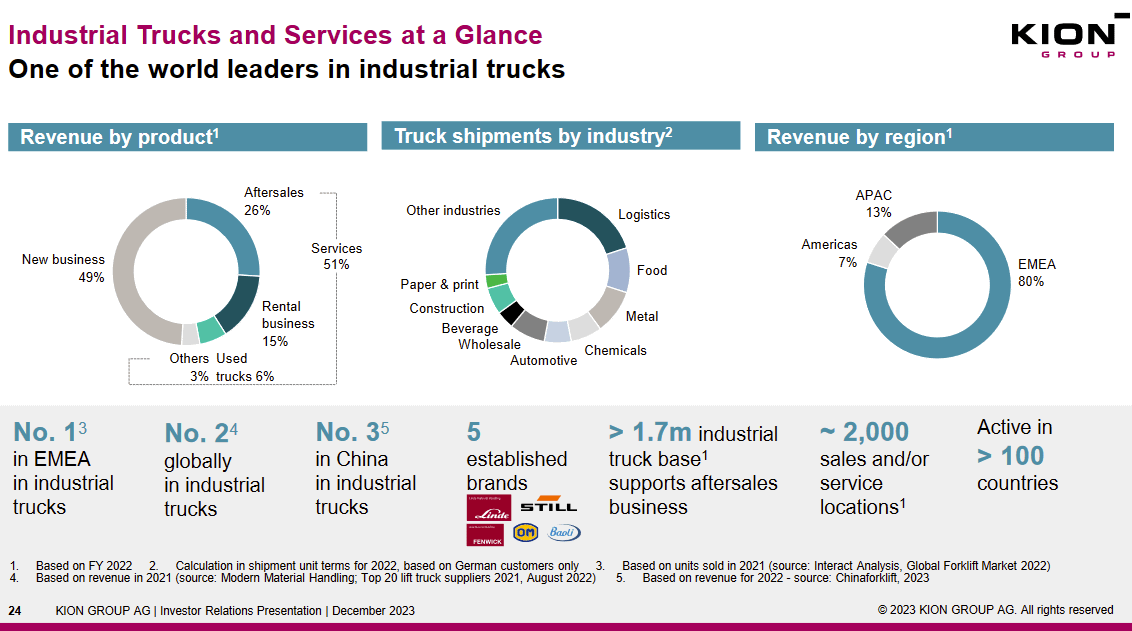
Revenue by Product: The segments's revenue stream is comprised of various sources including 49% from new business, 26% from aftersales, 15% from rental services, and a smaller percentage from used trucks and other activities.
Truck Shipments by Industry: The company primarily serves the logistics sector (51%) with additional clients in food, metal, automotive, chemicals, paper & print, construction, beverage, wholesale, and other industries. The industries served are diverse and expansive.
Revenue by Region: EMEA (Europe, Middle East, and Africa) accounts for 80% of the segment's revenue, with APAC (Asia-Pacific) following at 13%, and the Americas at 7%.
Performance Indicators:
KION Group holds a prominent position in the market, ranking first in EMEA, second globally, and third in China for industrial trucks.
The segment has over 1.7 million industrial truck bases that support aftersales businesses and operate approximately 2,000 sales and service locations worldwide.
The corporation has a truly global presence, engaging in active operations in more than 100 nations, thus ensuring a vast impact in the industrial truck market.
Financial Overview:
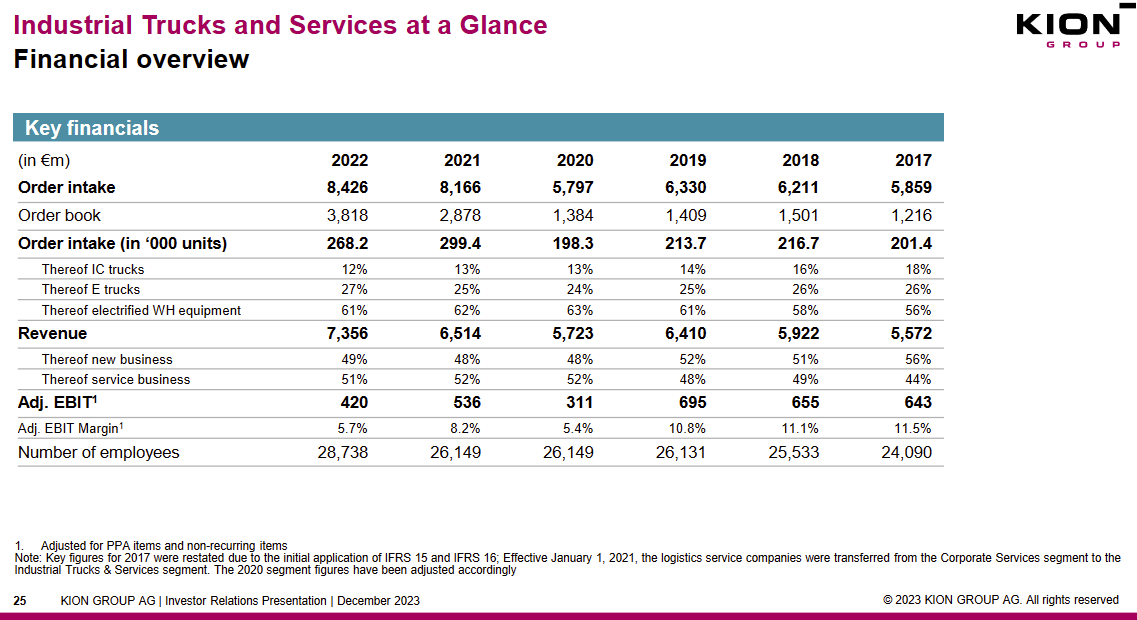
Order Intake and Revenue: The company recorded an order intake of €8,426 million in 2022, with an order book of 3,818 million. The total revenue generated was €7,356 million, with a substantial portion stemming from new business and services.
Product Breakdown: The sales of the products are diversified, featuring a combination of IC trucks, electric trucks, and electrically operated warehouse equipment. This demonstrates a prominent focus on electrification.
Profitability: The segment's adjusted EBIT margin was 5.2% in 2022, representing a decrease from the previous year's 5.3%.
Operational Scale:
The department hired a significant labor force comprising 28,738 workers, up from 26,149 employees in the previous year, suggesting growth and expansion.
The KION Industrial Trucks & Services segment exemplifies the firm's robust financial health and reputable market position. It caters to a diverse industrial client base worldwide by providing new business opportunities, aftersales services, and a wide-ranging rental offering. By emphasizing quality service and aftersales support, the segment not only ensures a reliable revenue stream but also strengthens customer loyalty and retention.
The financial data portrays a segment that serves as both a significant source of revenue for KION and an innovator in the material handling industry. KION's commitment to electrification and sustainable solutions further establishes its position as a forward-thinking leader in a rapidly evolving market. The Industrial Trucks & Services segment's substantial order book and robust order intake indicate continued growth and market dominance.
KION Group's leasing and rental business is an essential part of the company's activities, tightly integrated with its industrial trucks and services. Here is a summary:
Integration with New Truck Sales: KION's leasing and rental services are closely tied to its new truck sales. Almost half of the new truck units sold in FY 2022 included financing contracts. This integration not only makes new truck sales easier but also strengthens customer relationships and prioritizes overall cost of ownership.
Short-term Rental and Used Trucks: The short-term rental service is customized to meet customers' specific capacity requirements and is incorporated into Linde and STILL, two of KION's primary brands. KION frequently sources pre-owned trucks from these renting agreements, generating an extra source of revenue and a customer interaction point.
Leasing and Rental Strategy: KION's strategy aims to achieve profitable growth by catering to customers' needs and fully integrating corresponding services into regional sales structures. The approach involves credit risk management focused on assets, conservative residual value settings, and active management of assets. Leasing operations also facilitate the comprehensive life cycle management of trucks, including long-term and short-term rental, maintenance, and sales of used vehicles. Such measures optimize customer penetration and retention.
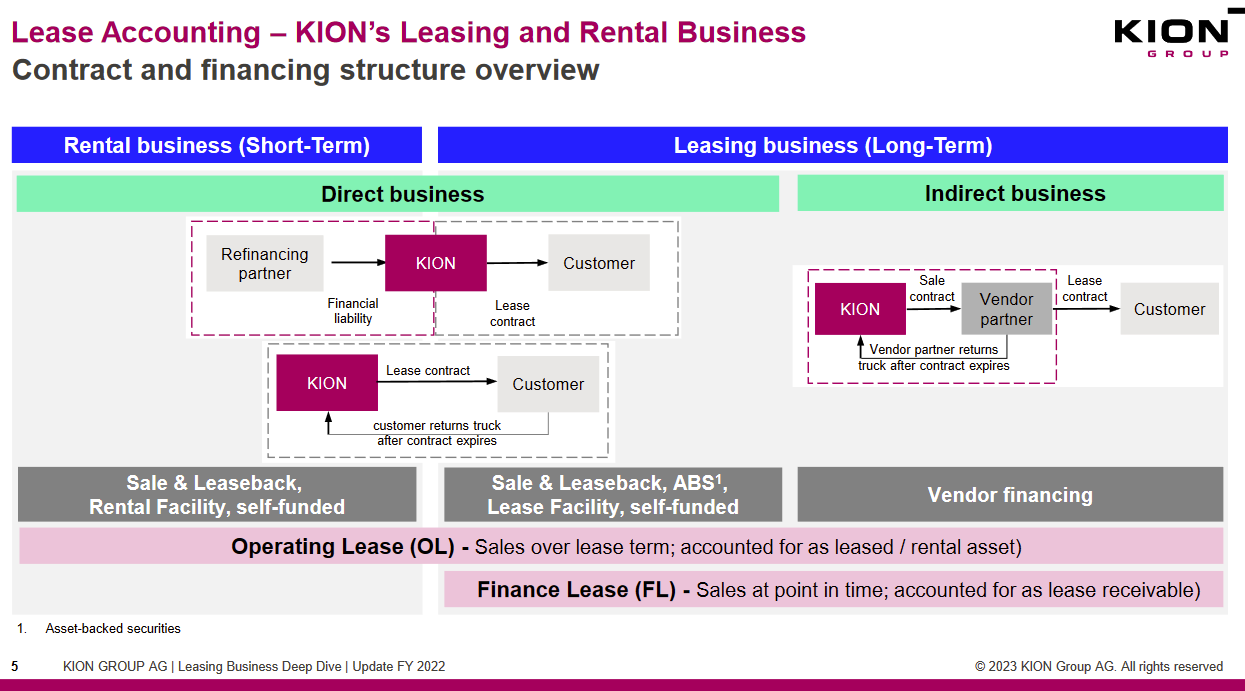
Contract and Financing Structure: KION offers a range of leasing options, including both short-term and long-term options. The company utilizes a combination of direct and indirect business models, which involve contractual agreements with customers and vendor partners. The structuring of these contracts varies, and can include financial or operational leases, which respectively allow for sales over the course of the lease term or at the point of leasing agreement.
Financial Impact: The leasing and rental business is a significant contributor to KION's overall revenue. Precisely, it accounts for 16% of the total revenue and 25% of Industrial Trucks and Services (ITS) revenue. In 2022, the revenue breakdown shows €726 million from finance leases, €560 million from operating leases and €546 million from rental operating leases.
Supply Chain Solutions
The Supply Chain Solutions (SCS) segment of the KION Group is a strategic business unit that specializes in advanced material handling solutions for supply chain logistics. SCS provides comprehensive automation solutions such as warehouse automation, systems integration, and software services to streamline and optimize logistics operations for various industries. Here, we provide a detailed overview of the segment based on KION's typical operations and offerings.
Automated Systems and Integration: SCS specializes in designing and implementing automated material handling systems. This can include conveyor systems, automated storage and retrieval systems (AS/RS), sortation systems, and picking systems integrated into a cohesive solution.
Software Solutions: A vital aspect of Supply Chain Systems (SCS) is the software that efficiently manages these complex systems. KION, via its subsidiary Dematic, provides exclusive warehouse management systems (WMS), warehouse execution systems (WES), and other software solutions that ensure real-time data, analytics, and complete command over the entire logistics operation.
Project Engineering and Design: The division collaborates with clients to create and develop customized solutions that cater to their particular operational requirements. This necessitates a consultative approach to comprehend the exclusive obstacles and prerequisites of each customer's supply chain.
Lifecycle Services: SCS offers continuous support and services during the life cycle of installed systems, covering maintenance, upgrades and optimization to guarantee efficient and effective operation over time.
Global Customer Base: The segment addresses the needs of multiple industries that rely on efficient supply chain operations, including e-commerce, retail, food and beverage, manufacturing, and third-party logistics providers. The customer base served is global in nature.
Innovation and Research & Development (R&D): KION invests in research and development in the SCS field to keep up with the quickly changing tech industry in logistics automation. This emphasis on innovation guarantees KION's competitiveness by enabling them to provide the most advanced solutions to their clients.
Strategic Growth: The SCS sector propels growth for KION, given the mounting appetite for efficient, automated supply chain solutions in the midst of E-commerce proliferation and the requisite sophistication of logistics in an increasingly globalized economy.
Sustainability: As KION's SCS segment emphasizes sustainable operations, they prioritize developing solutions that not only improve efficiency but also support the sustainability goals of both the company and its clients.
In summary, the Supply Chain Solutions division of KION Group focuses on enhancing the performance and sustainability of global supply chains through innovative custom solutions, a comprehensive range of services and software, and an unwavering commitment to excellence. The division plays a vital role in the company's overarching strategy by targeting the high-growth automated supply chain logistics market.
Market Leadership and Growth
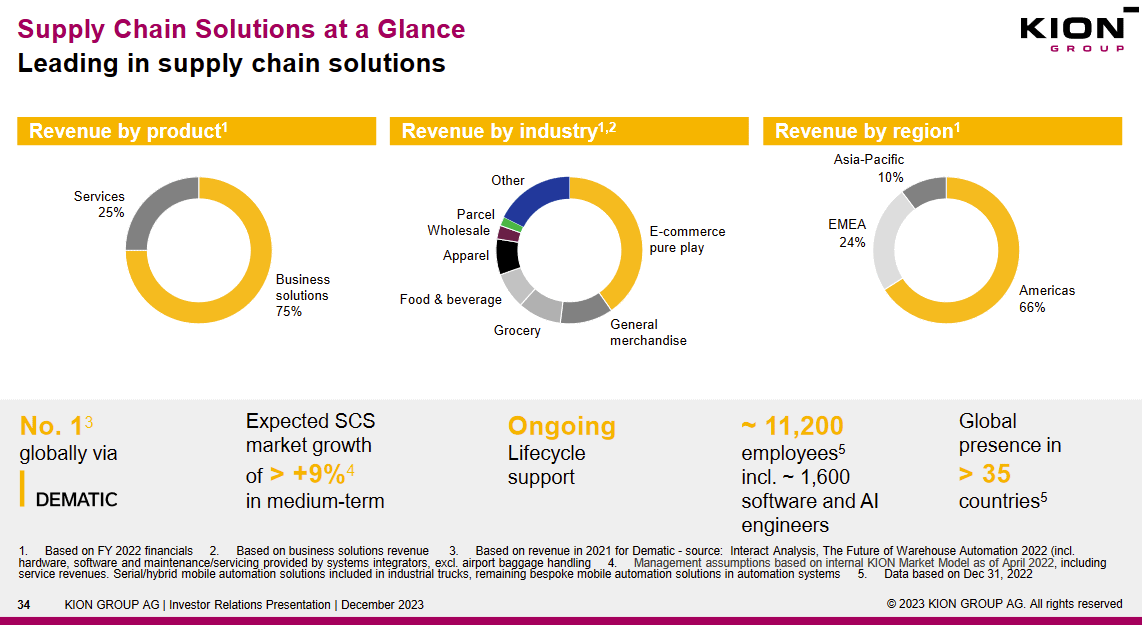
KION's Supply Chain Solutions (SCS) division, headed by DEMATIC, holds an established reputation as a global leader in supply chain solutions, boasting a prominent market presence, and playing a critical role in the company's overall strategic success.
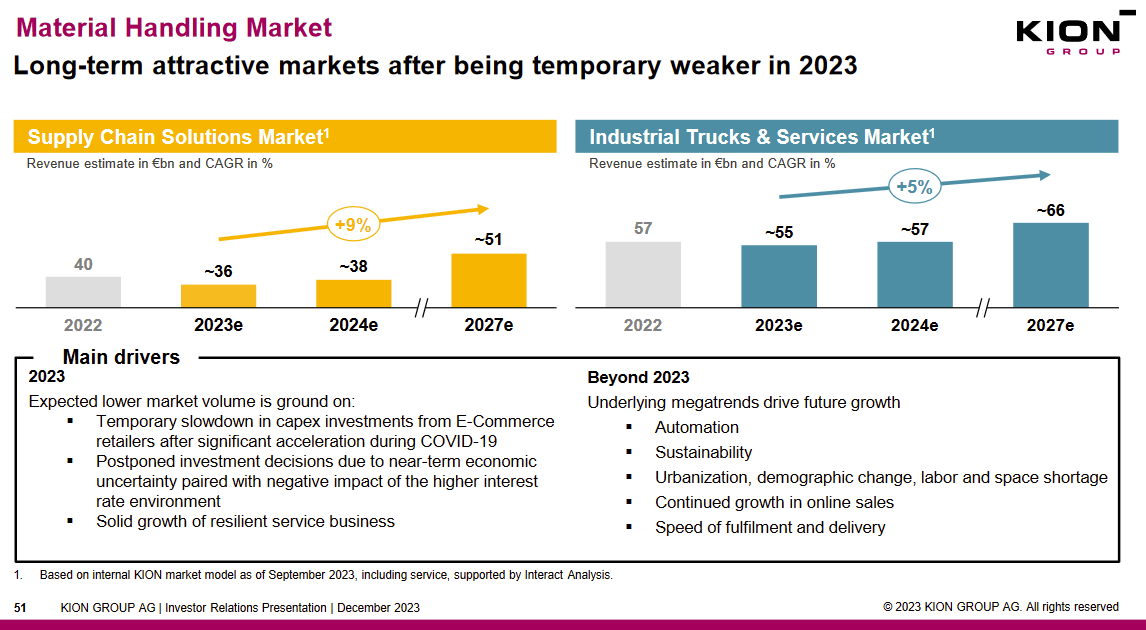
The segment is experiencing robust market growth, with expectations to exceed 9% in the medium term, showcasing the increasing demand for automated supply chain solutions.
Revenue Composition
The segment's revenue is primarily derived from business solutions which make up 75% of their total revenue, with services comprising the remaining 25%. This underscores the segment's commitment to providing complete solutions alongside supportive services.
Industry and Regional Distribution
KION's Supply Chain Solutions (SCS) segment caters to a variety of industries such as e-commerce, general merchandise, grocery, food and beverage, apparel, and wholesale and parcel, where the aforementioned industries play a vital role.
In terms of regional revenue, the Americas have a leading position with 66%, followed by EMEA (Europe, Middle East, and Africa) at 24%, and Asia-Pacific at 10%, which suggests a strong presence in the American market.
Operational Scale
The segment has a widespread presence in over 35 countries, indicating its broad reach in the market of supply chain solutions.
With a workforce of approximately 11,200, which includes roughly 1,600 software and AI engineers, this segment possesses significant proficiency in the realm of technology and automation.
Financial Performance
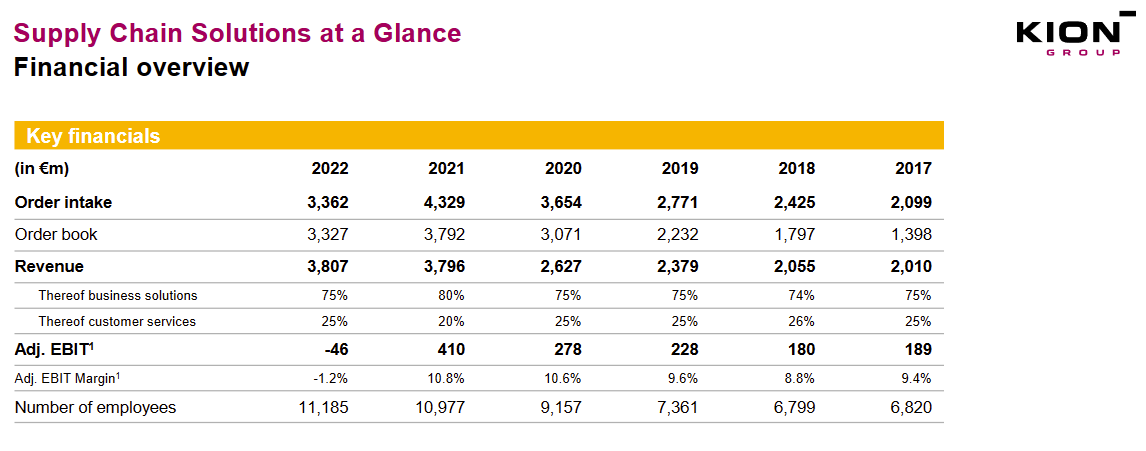
In 2022, the company received orders amounting to $3.362 billion, with an order backlog of $3.327 billion indicating a promising pipeline for future revenues.
Revenue totaled $3,807 million, with strong performance and offerings in the business solutions and customer services segments.
However, the segment encountered difficulties, resulting in an adjusted EBIT of negative -46 million euros and an adjusted EBIT margin of negative -1.2%.
Service Approach and Execution Excellence
The lifecycle-based service approach of the SCS segment aims to decrease the overall cost of ownership and enhance value by providing a comprehensive service package that covers the usual customer project cycle from design to evolution.
The company's services are classified into three tiers: Essential, Advanced, and Expert. Each tier provides distinct levels of customer support and desired outcomes, coupled with digital service solutions and extended service contracts.
DEMATIC's drive for excellence in execution is centered on regionalization and standardization, with the goal of promoting speed, growth, and profitability.
In summary, KION's Supply Chain Solutions (SCS) segment is a crucial and constantly developing component of the organization. It has experienced considerable growth, offers a broad range of industry services, and employs a significant number of specialized staff. Even though it has faced some financial challenges, the segment's forward-thinking approach, highlighted by substantial investments in technology and a global presence, positions it well for future expansion in the rapidly evolving supply chain solutions market.
Revenue Recognition
KION Group's revenue recognition policy is comprehensive and varies depending on the nature of the transaction and the business model. Here are the details as per their 2022 annual report:
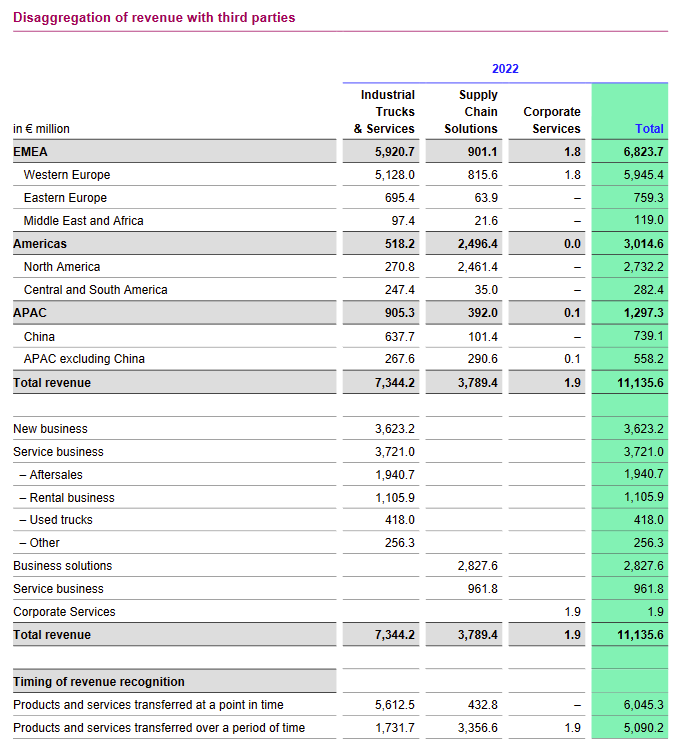
Sale of Industrial Trucks (New Business): Revenue from the sale of goods is recognized at the point in time when the contractual performance obligation is satisfied. This typically occurs when KION Group delivers goods to a customer, the risks and rewards incidental to ownership of the goods are transferred to the customer, and there is a right to receive the contractually agreed consideration.
Lease Business:
In the case of direct leases classified as finance leases, revenue is recognized on the commencement date in the amount of the sale value of the leased asset.
For leases classified as operating leases, revenue is recognized on a straight-line basis generally in the amount of the lease payments.
Service Business:
Revenue from the rendering of services is recognized upon performance of the service either at a point in time or over a period of time. If it is over a period of time, revenue is recognized on a straight-line basis over the period of performance or in accordance with the proportion of the overall service rendered by the reporting date.
Indirect Lease Business:
When industrial trucks are sold to vendor partners who enter into long-term leases with end customers, the revenue recognition depends on whether the vendor partner gains control over the asset. The specifics of control transfer and revenue recognition can be complex and are not fully detailed in the provided excerpts.
Short-term Rental Business:
In short-term rental agreements, which can range from a few hours to a year, the recognition of revenue depends on the terms of the rental agreements and typically aligns with the period of the rental.
Used Trucks and Fleet Management:
The sale of used industrial trucks is recognized when the control of the trucks is transferred to the buyer.
KION Group's revenue recognition practices comply with International Financial Reporting Standards (IFRS), ensuring that revenue is recognized in a way that faithfully represents the transfer of goods or services to customers. The timing and amount of revenue recognized reflect the reality of when the company satisfies its performance obligations under the contract with the customer.
Strategy and Moat of KION
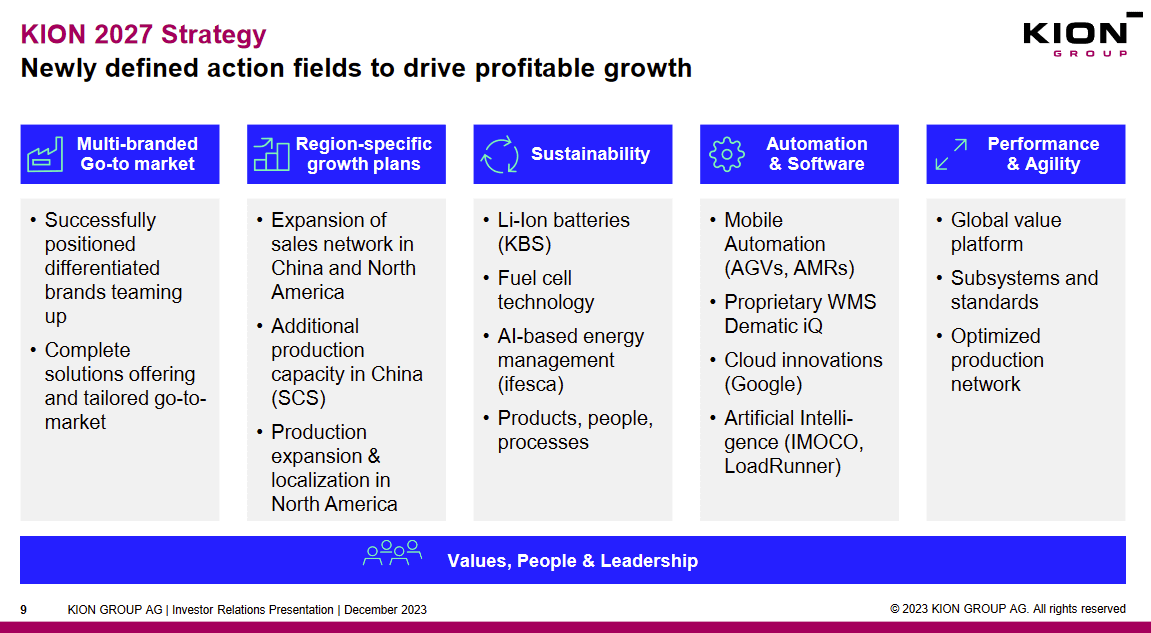
KION Group aims to achieve profitable growth through a multifaceted approach in its 2027 strategy. The strategy comprises various key action fields, including a focus on Multi-Branded Go-to-Market and Region-Specific Growth Plans.
KION intends to capitalize on the success of its differentiated and well-positioned brands by providing tailored, all-inclusive solutions that cater to specific market requirements. This involves expanding sales networks in China and North America, increasing production capacity in China, specifically for Supply Chain Solutions (SCS), and expanding and localizing production in North America.
Additionally, the company is prioritizing sustainable technological advancements, such as Lithium-Ion batteries (KBS), fuel cell technology, and AI-based energy management (ifesca). KION is investing in mobile automation technologies, including Automated Guided Vehicles and Autonomous Mobile Robots, in order to enhance product offerings, improve processes, and align with sustainability goals.
The company is currently prioritizing its own Warehouse Management System (WMS) called Dematic iQ, as well as cloud innovations through collaboration with Google, and implementing Artificial Intelligence technology (including IMOCO LoadRunner).
In relation to performance and agility, the company is concentrating on creating a worldwide value platform, developing subsystems and standards, and streamlining production networks to improve operational efficiency and agility.
Overall, KION Group's 2027 strategy aims to enhance its market position by implementing technological innovation, promoting sustainability, and expanding globally. It prioritizes meeting regional demands and embracing digital transformation.
KION Group possesses competitive advantages stemming from its extensive portfolio, strategic global positioning, and innovation-based approach. The following elements comprise the foundation of KION's competitive edge:
Diversified Product Range: KION's product portfolio spans from traditional forklifts to cutting-edge warehouse automation and supply chain solutions. This range facilitates KION's ability to cater to a vast array of industries, tailoring to diverse customer needs and market demands.
Global Footprint with Local Expertise: With a notable presence in crucial markets like EMEA, APAC, and the Americas, KION blends its worldwide outreach with native proficiency. This empowers region-specific tactics to satisfy the particular demands of diverse markets, thereby presenting KION with an advantage in terms of penetrating markets and client services.
Innovation and R&D: KION leads technological advancements by investing in research and development to foster innovation. The company's focus on sustainable technologies, like lithium-ion batteries and fuel cell technology, establishes it as an industry leader in resource-efficient material handling solutions.
Strong Brand Portfolio: The corporation's array of brands comprises some of the industry's most highly regarded appellations, such as Linde Material Handling and DEMATIC. These brands are noted for their quality, dependability, and inventive spirit, which strengthen KION's standing in the market.
Operational Excellence: KION prioritizes efficiency and agility in their operational strategies, with the goal of establishing a global value platform. To achieve this, KION develops subsystems and standards, optimizes their production network, and invests in automation and software solutions such as Warehouse Management Systems.
Strategic Partnerships: KION's structure of shareholders and strategic partnerships, particularly with Weichai Power, creates opportunities for entering one of the world's fastest-growing markets, China. These partnerships provide financial stability and potential access to state-of-the-art manufacturing and technology expertise.
By utilizing these competitive advantages, the KION Group is not only meeting the industry's demands but also leading the way in material handling and intralogistics, establishing a notable standard for innovation, efficiency, and growth within the sector.
Market Position of KION
KION Group maintains a significant global market position in industrial trucks and automation systems.
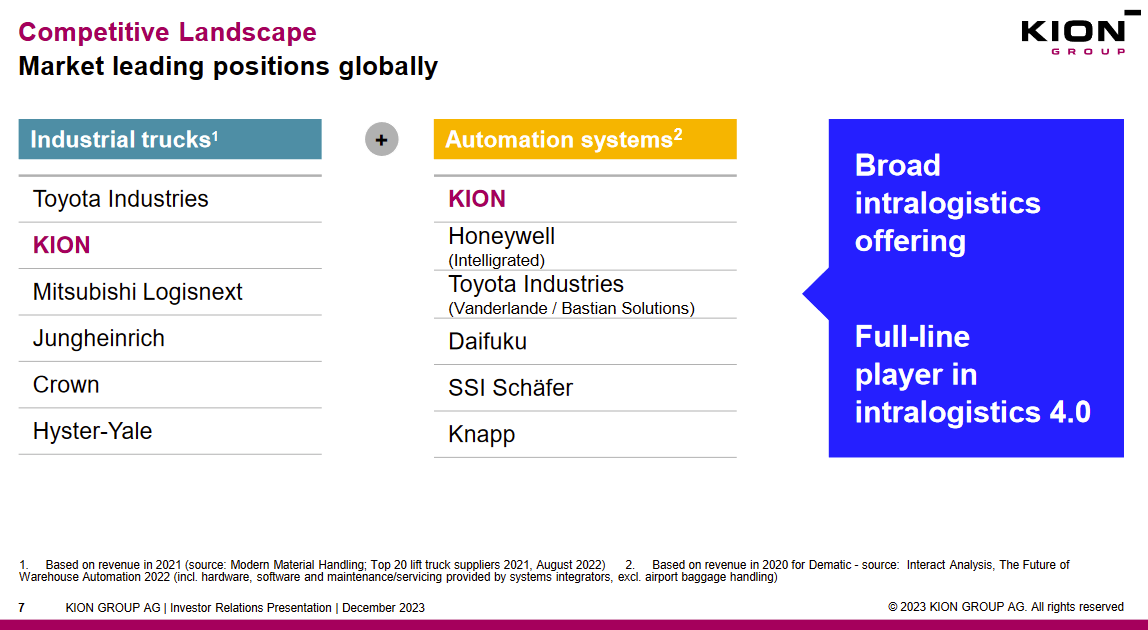
Industrial Trucks: KION ranks as one of the leading players in the industrial truck market worldwide. This market comprises Toyota Industries, Mitsubishi Logisnext, Jungheinrich, Crown, and Hyster-Yale as the main competitors. KION secured its position in this industry sector based on its revenue as of 2021, according to "Modern Material Handling; Top 20 lift truck suppliers 2021".
Automation Systems: KION is a major player in the automation systems market and competes with other companies such as Honeywell (Intelligrated), Toyota Industries (Vanderlande/Bastian Solutions), Daifuku, SSI Schäfer, and Knapp. Interact Analysis has reported that KION's ranking in this sector is based on its revenue in 2020 for Dematic in "The Future of Warehouse Automation 2022".
Additionally, KION is a leading intralogistics solutions provider in the industry, offering a diverse range of solutions for intralogistics 4.0. This broad range of solutions positions KION advantageously in the competitive landscape, allowing it to cater to a wide variety of customer requirements in both industrial trucks and automation systems.
Shareholder Structure
KION Group's shareholder structure, significantly influenced by Weichai Power Co. Ltd.'s 46% ownership, presents a nuanced array of opportunities and challenges because of its strong ties with China.
On the positive side, the strategic partnership with Weichai Power goes beyond mere financial investment, providing KION with entry into the extensive and rapidly growing Chinese market. Weichai's proficiency in manufacturing and technology, notably in hydraulics and engine production, could result in significant supply chain and technological synergies, bolstering KION's product development and manufacturing processes. Furthermore, the support of a financially sound shareholder like Weichai Power affords KION with financial stability, instilling confidence in investing in long-term strategies and innovations.
However, this shareholder structure presents challenges. The significant ownership of a Chinese company in a German multinational may cause geopolitical concerns, particularly in the current climate of increased trade tensions and national security worries. This scenario could impact KION's operations or market perceptions, especially in Western nations. Moreover, an over-dependence on a single major shareholder may restrict KION's autonomy and hinder its capacity for independent decision-making or rapid market adaptation.
Concerns also arise regarding the influence of Chinese ownership on KION's brand image, quality standards, and business practices, potentially impacting customer perceptions in foreign ownership-sensitive markets. Finally, the investment of a significant Chinese entity in a European business could provoke greater regulatory attention, particularly for transactions involving technology transfer or sensitive industries.
In conclusion, the shareholder structure of KION Group, with significant ties to Weichai Power and, therefore, to China, presents a multifaceted combination of market entry benefits, financial stability, and strategic synergies. However, this is accompanied by potential risks arising from geopolitical factors, overreliance on shareholders, market perception, and regulatory scrutiny. It is essential for KION to navigate these aspects objectively, utilizing the advantages while mitigating the risks, to uphold its worldwide competitive advantage and ensure long-term sustainable growth.
Financials of KION
Overview
Let's examine some key performance indicators (KPIs) from the balance sheet, income statement, and cash flow statement. Although the fiscal year 2022 could initially be perceived as problematic, a more detailed analysis indicates a strong recovery in the last twelve months (LTM). Of noteworthy mention is the substantial increase in sales to €11.2 billion. In a significant change, the operating cash flow, which was previously a concern, has now turned positive, reaching almost $1 billion. The rise in free cash flow, amounting to $570 million, confirms this positive development and demonstrates a remarkable financial improvement, indicating a robust transformation in the company's operational efficiency and financial stability.
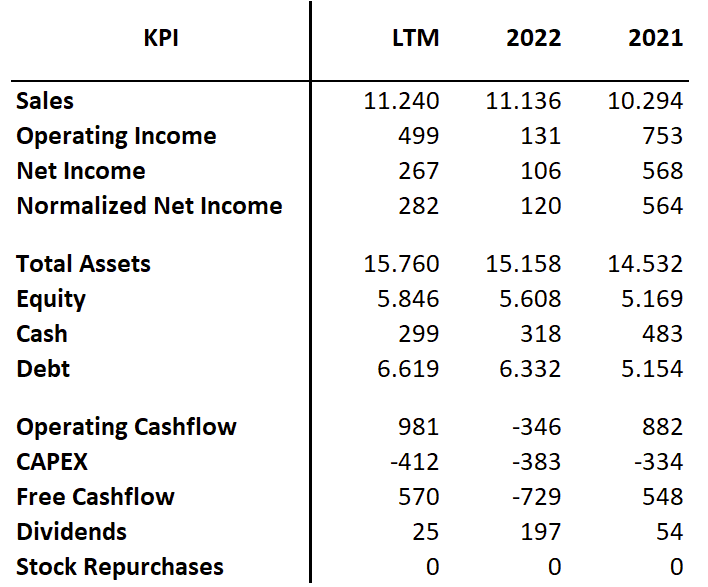
Let's examine the financial structure of KION's balance sheet, which will help us understand the company's fiscal foundations including its assets, liabilities, and equity components. Analyzing these elements will provide insights into KION's financial stability and strategic resource allocation, which are critically important for evaluating the company's overall financial health and future prospects.
Equity and Debt
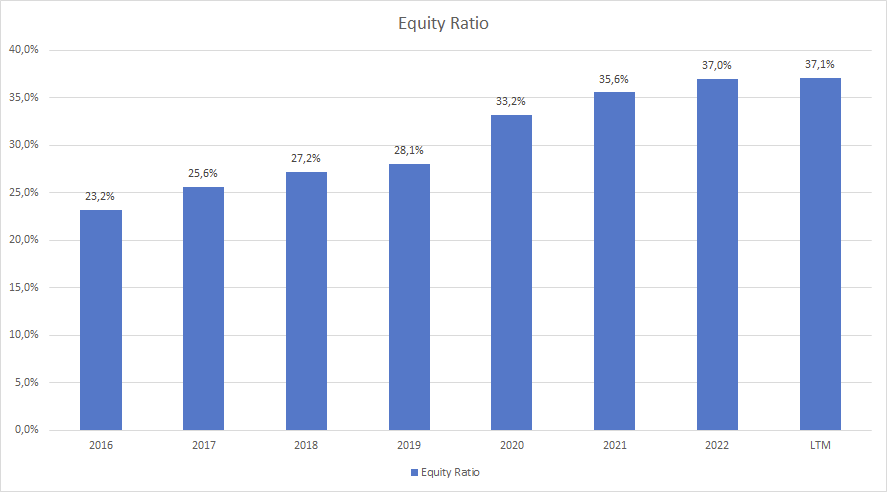
KION Group has exhibited impressive fiscal responsibility, evident in its substantial equity ratio of approximately 37%. This data signals a considerable rise from 23.2% in 2016, demonstrating the continued strengthening of the company's equity foundation over time. It is noteworthy that KION follows a disciplined dividend policy, featuring comparatively modest payout ratios (more elaborated in the Capital Allocation section). This conservative approach not only strengthens the financial stability of the company but also has a positive impact on its debt structure.
The KION balance sheet includes various types of financial liabilities. of the company's leasing and rental financing operations. A detailed explanation of KION's net financial debt calculation is available in the notes, providing valuable information about its financing structure and leverage level. Based on my analysis, net financial debt is a crucial metric, and the net debt to EBITDA ratio serves as a dependable indicator of financial health. KION's debt level can be regarded as exceptionally healthy, with a comfortable ratio of 1.0, which highlights the company's sound financial management and risk mitigation strategies.
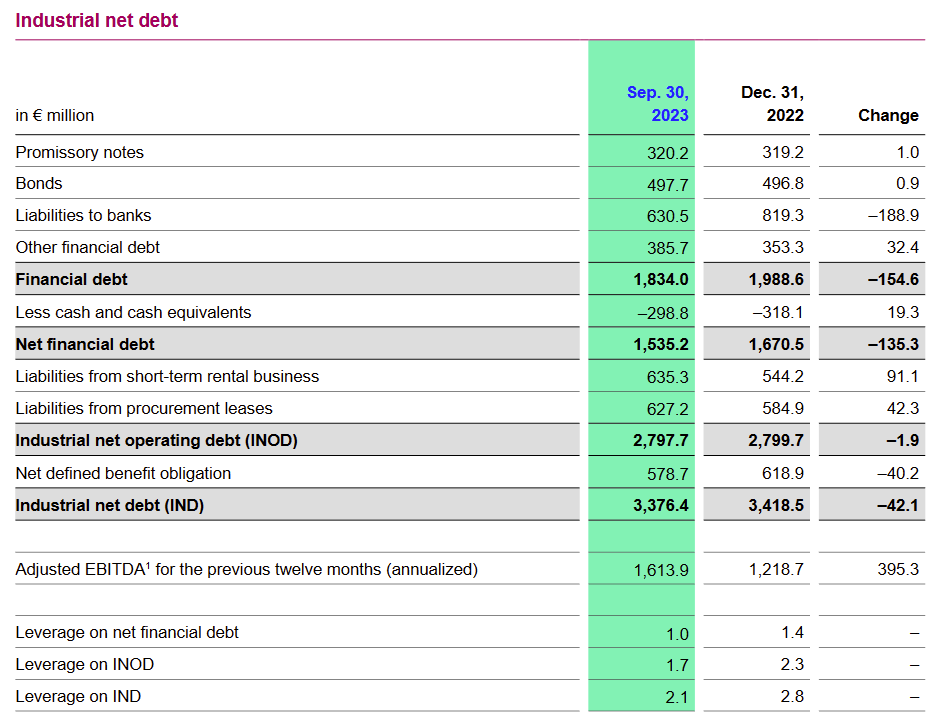
Analyzing KION's financial position poses a noteworthy challenge due to the scarcity of detail included in its supplementary debt notes. The company presents solely general information regarding debt maturity, failing to specify interest rates. As a result, our ability to accurately evaluate the cost implications of future refinancing activity is hindered by this lack of granularity. Given the current interest rate environment, it is reasonable to assume that refinancing may become more expensive in the future. This is a crucial factor to consider, as it may impact KION's financial strategy and cost management moving forward.
Profitability and Cash Conversion
KION's profits remained impressively stable from 2016 to 2021, with only a minor decline stemming from the COVID-19 pandemic. While facing economic obstacles globally in 2022, KION encountered stress but is currently displaying a slow but steady recovery. The improvement is denoted by growing margins and a FCF margin returning to regular levels.
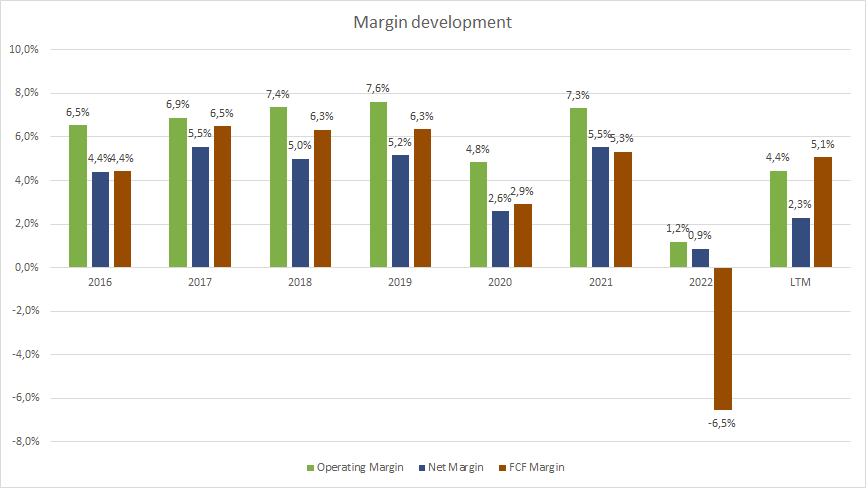
Similarly, the company's return metrics, specifically Return on Assets (ROA) and Return on Invested Capital (ROIC), reflect this trend. Despite currently being low, these metrics are undoubtedly trending upwards.
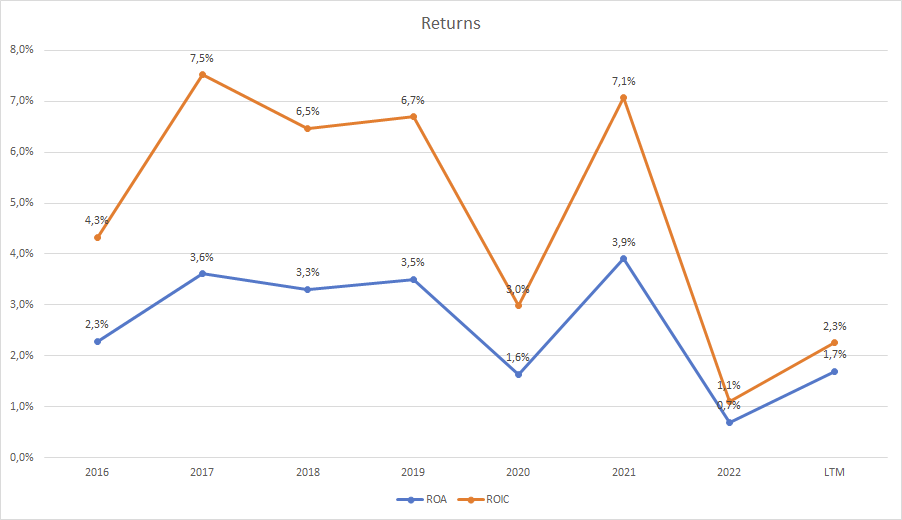
However, it is worth noting that while KION's overall profitability and returns are satisfactory, they may not be as high as those of other potential investment opportunities. From an investment perspective, more emphasis needs to be placed on improving the ROIC, ideally raising it to double-digit levels.
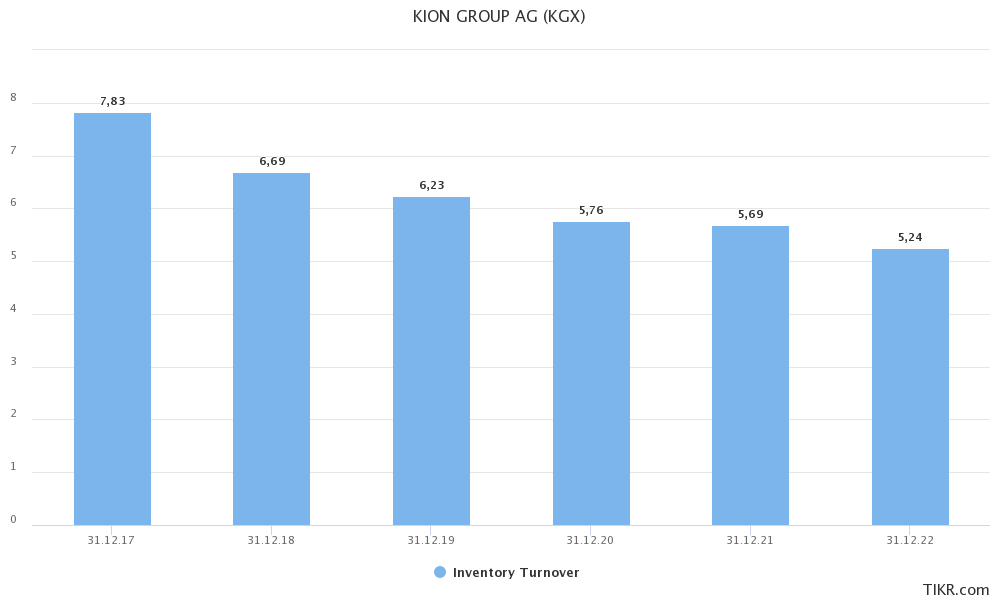
An in-depth analysis of KION's Cash Conversion Cycle (CCC) reveals a somewhat concerning situation. The cycle has doubled from 2017 to 2022, increasing from 52 days to 100 days. There may be multiple factors contributing to this trend.
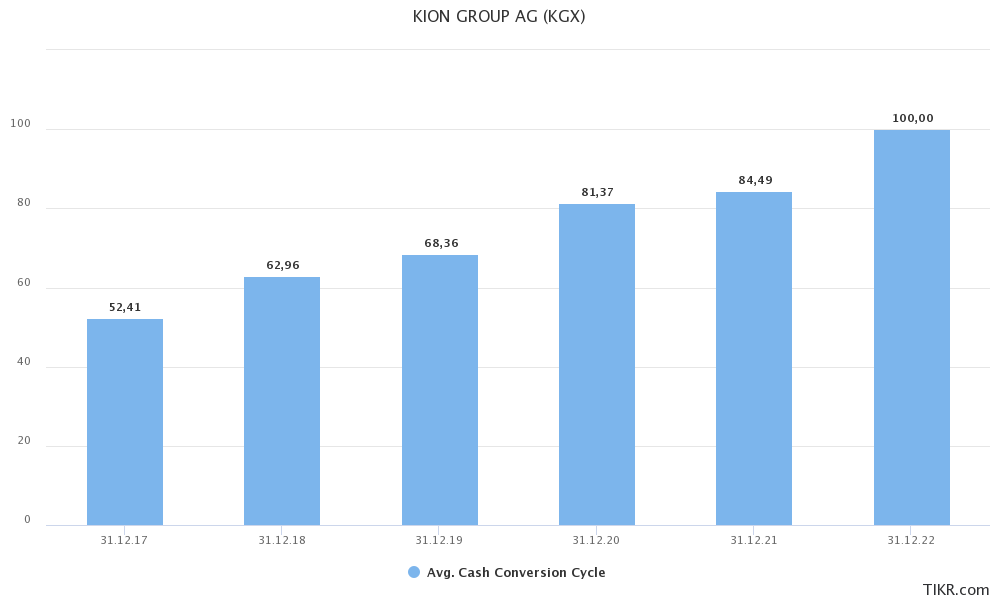
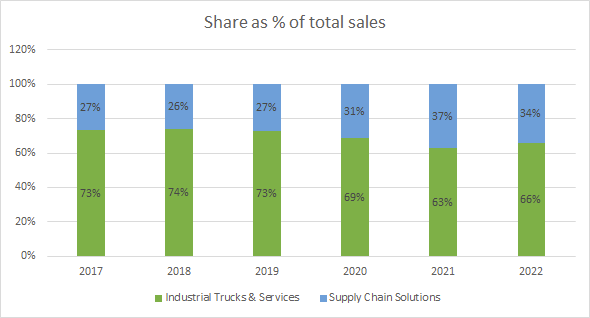
One likely contributor is the growing percentage of sales coming from the supply chain solutions sector, which often involves longer periods of performance. This leads to payment delays and necessitates building up inventory for larger-scale projects.
As a result, the CCC has been impacted, specifically with a rise in Average Days Sales Outstanding (DSO) and decrease in Inventory Turnover in recent years. This trend is illustrated in the following graphs.
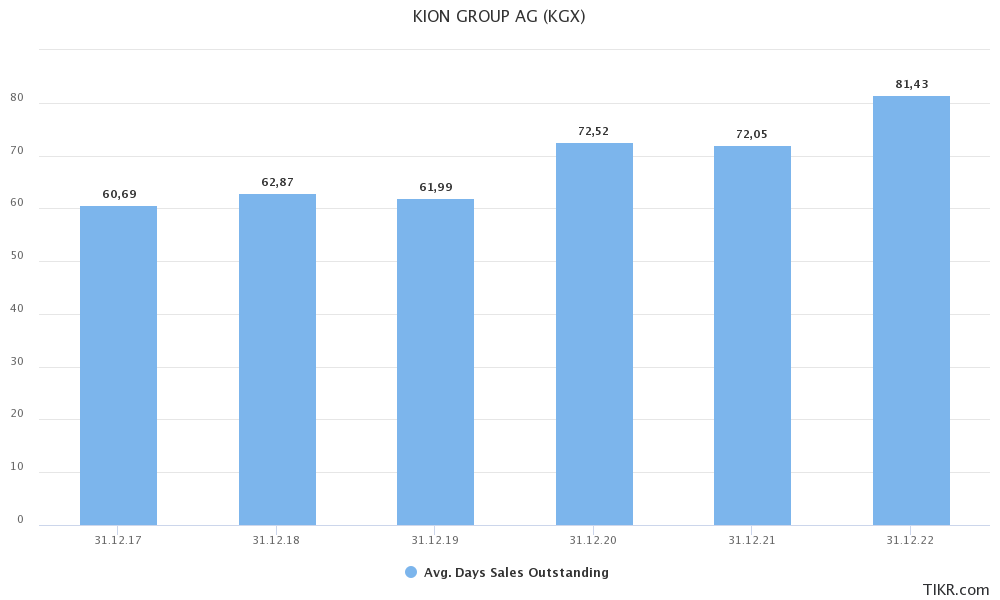
Furthermore, the current and intense market conditions along with the competitive pressures may have a significant impact on this tendency. In association with the nature of KION's business operations, these elements contribute to the alterations observed in the financial performance and metrics of the company.
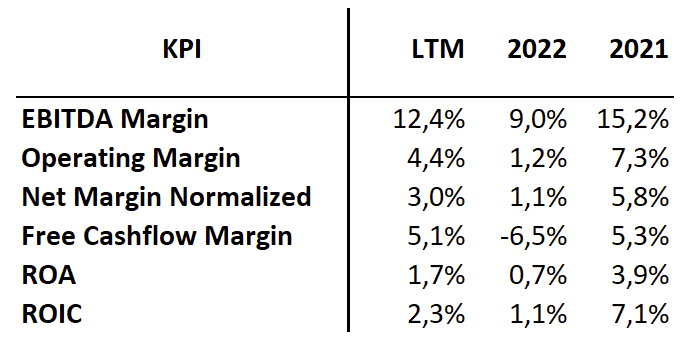
In conclusion, the financial analysis of KION from 2016 to 2022 demonstrates the company's resilience in confronting several market challenges. Although KION experienced pressure during the COVID-19 pandemic and the subsequent global economic downturn, it is gradually recuperating. The development in margins and the normalization of the free cash flow margin are optimistic signs. However, the company's profitability and return metrics indicate potential for enhancement, specifically in improving the Return on Invested Capital (ROIC) to reach more competitive levels.
The extended Cash Conversion Cycle from 2017 to 2022 is concerning, primarily attributable to the evolving dynamics of KION's supply chain solutions business. This change has resulted in extended payment periods and growth in inventory, which has affected both the Average Days Sales Outstanding and Inventory Turnover. While these adjustments are reasonable given the growth of KION's business operations and the difficult market environment, they emphasize the importance of concentrating on enhancing operational efficiency and financial management, to fortify the financial health of the company.
Capital Allocation
Since acquiring Dematic in 2016, which enhanced KION's Supply Chain Solutions (SCS) business segment, KION has abstained from significant acquisitions. This decision reflects an emphasis on internal growth and consolidation, as well as a lack
of share repurchasing, suggesting a preference for allocating capital elsewhere in the company. Recently there has been an increase in expenditures on research and development (R&D), demonstrating KION's dedication to technological advancement and innovation.
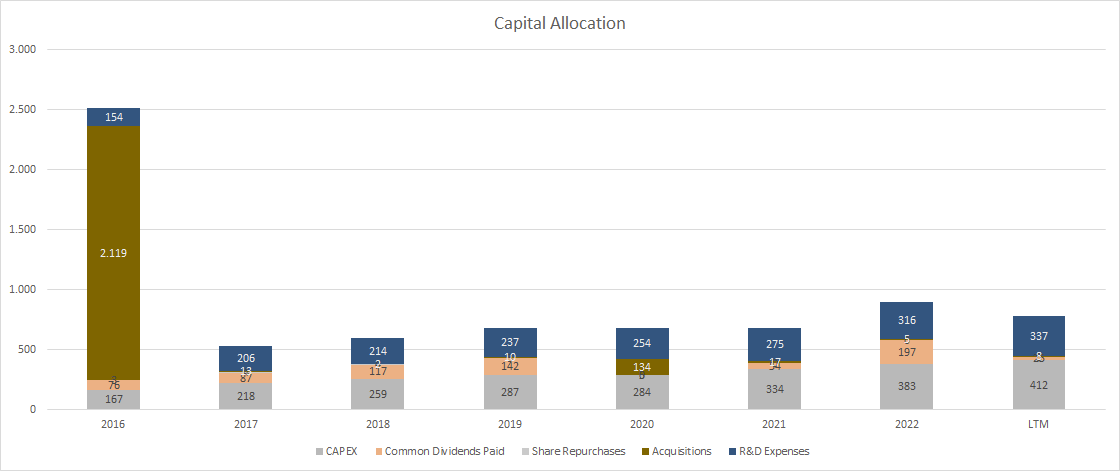
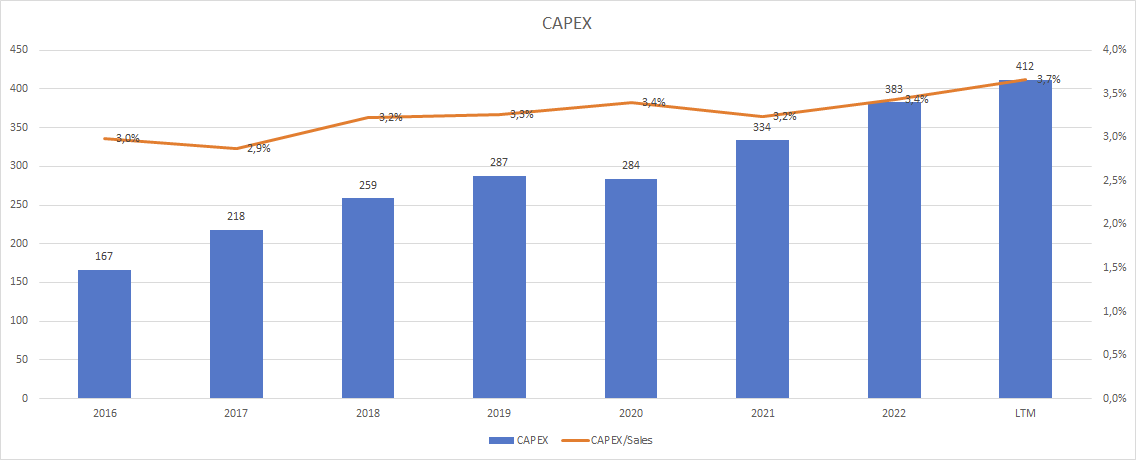
Capital expenditure (CAPEX) has increased significantly, growing from €167 million to €412 million. This sizeable investment highlights KION's commitment to expanding and upgrading operational capabilities as well as its dedication to growth. Similarly, CAPEX as a percentage of sales has also risen, further underscoring the company's strategic investments in future growth.
KION has implemented a conservative dividend policy, maintaining low payout ratios and avoiding stable distributions. This approach prioritizes financial stability over cash returns to shareholders to secure sufficient capital for future growth and bolster the company's financial standing.
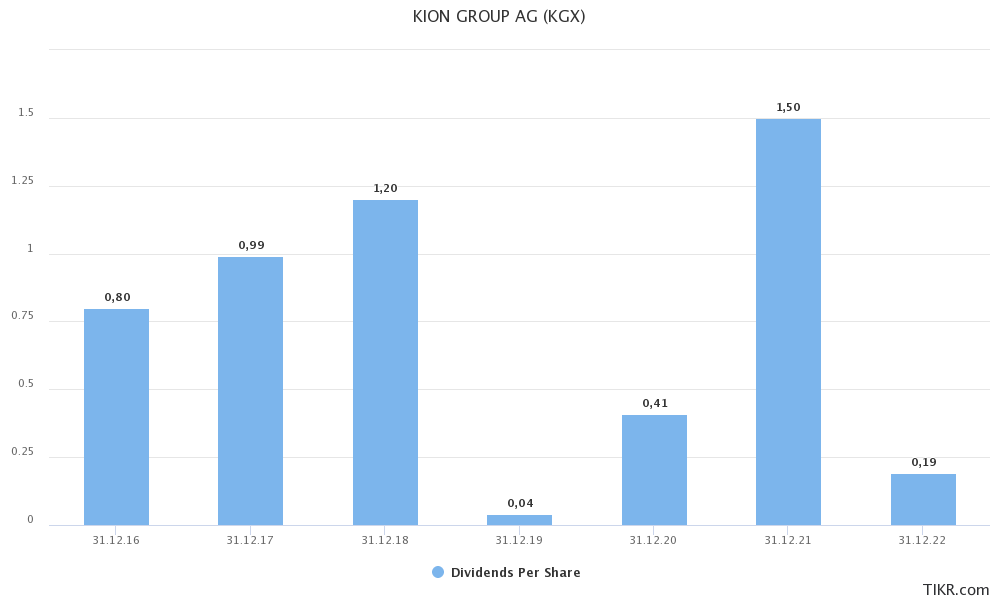
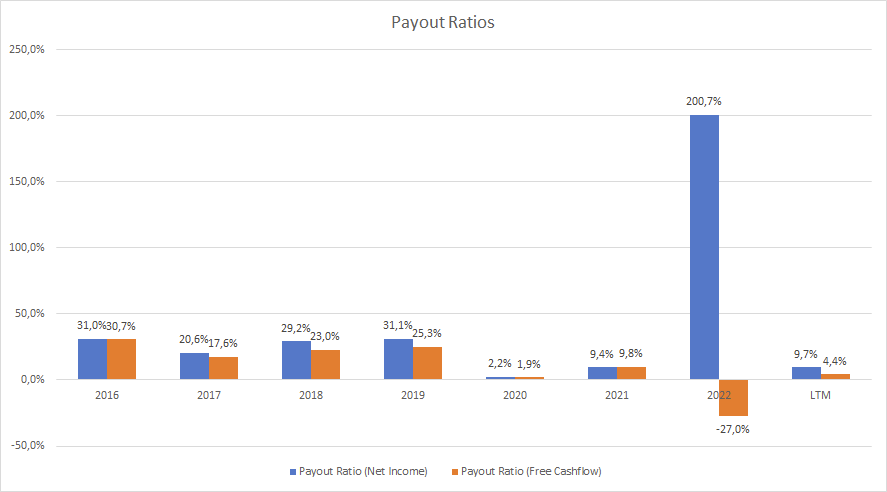
In summary, KION has taken a cautious and strategic approach towards its capital allocation strategy since it acquired Dematic in 2016. The company has refrained from making any major acquisitions or share repurchases, opting to channel its resources into research and development, as well as significant capital expenditures. This move underlines KION's commitment to innovation, technological advancement, and operational expansion. The company's prudent financial strategy focuses on sustaining long-term growth and strengthening its financial footing through a conservative dividend policy that features low payout ratios and prioritizes financial stability over regular cash distributions.
Recent development
In Q3 2023, despite adverse market conditions, KION Group displayed sound financial solvency and strategic advancements. Its revenue ticked up slightly from €8.243 billion to €8.347 billion YoY, demonstrating steady growth. Adjusted EBIT experienced a remarkable surge, more than doubling to €571.9 million, which significantly contributed to elevating the adjusted EBIT margin from 2.6% in the previous year to 6.9%. This financial upswing was additionally boosted by a robust free cash flow of $329.3 million, a significant rebound from the negative $971.9 million in the preceding year.
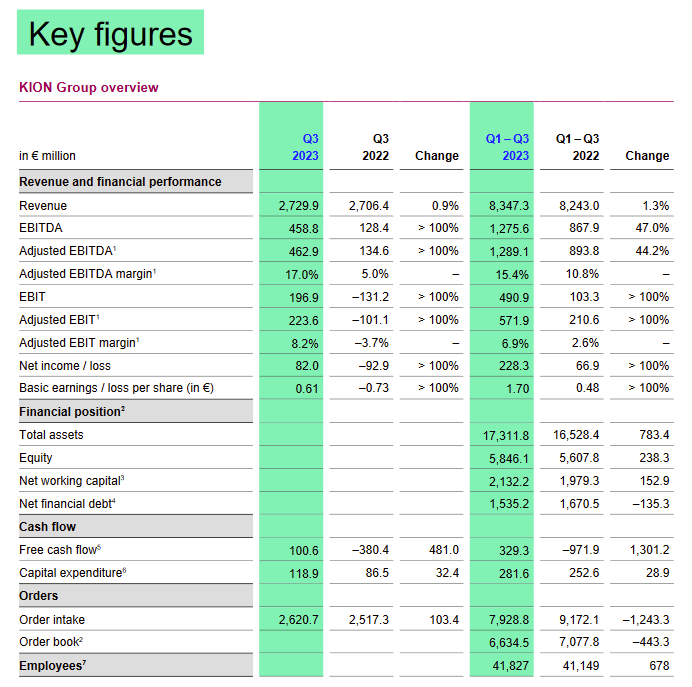
The Industrial Trucks segment experienced a decrease in orders due to high order volumes in 2022. This decrease was evident in both the EMEA and Americas regions, although the APAC region saw growth. The Supply Chain Solutions segment struggled with economic uncertainties, specifically a slowdown in e-commerce that negatively impacted investments in warehouse automation.
During this quarter, the Industrial Trucks & Services (ITS) segment experienced substantial enhancements in operational performance due to better material availability. This led to reduced backlogs, increased revenue, and improved margins. Unfortunately, the Supply Chain Solutions (SCS) segment had to cope with challenges resulting from delayed customer projects adversely affecting both revenue and earnings. Although the team focused on efficient project management, the impact was significant. KION Group made significant progress in investments and innovations, including the development of new facilities in both China and the United States, as well as advancements in fuel cell systems and lithium-ion battery recycling technologies. The company further demonstrated its dedication to sustainability by joining the Science Based Targets initiative and achieving an upgraded AAA MSCI sustainability rating.
Financially, the KION Group implemented strategic measures by issuing €375 million in promissory notes to extend the maturity profile of its financial liabilities. Furthermore, pending approval from Russian authorities, the sale of the ITS business in Russia is currently underway.
In terms of order intake and book values, the total order intake decreased by 13.6% compared to the previous year, totaling €7928.8 million. The ITS segment saw a 15.1% decrease in order intake, while the SCS segment experienced a decrease of 9.5%. Despite the decline in revenue of the SCS segment by 25.8% to €2197.0 million, the order book remained robust at €6634.5 million.
Despite the decline in revenue of the SCS segment by 25.8% to €2197.0 million, the order book remained robust at €6634.5 million. Despite the decline in revenue of the SCS segment by 25.8% to €2197.0 million, the order book remained robust at €6634.5 million. The ITS segment's revenue grew by 16.4% to €6149.3 million, while earnings and profitability displayed marked improvements. EBIT soared to €490.9 million, an increase of €387.6 million from the previous year. However, net financial expenses grew significantly to €131.8 million, primarily due to higher interest rates. During the period, the net income witnessed a notable surge to €228.3 million, as opposed to €66.9 million in Q1-Q3 2022.
Despite a 23% decrease in order intake, which contracted to 175,000 units, the Industrial Trucks & Services branch posted an overall revenue gain of 16.5%, amounting to €6,159.8 million. Impressively, the segment's EBIT adjusted figure rose to €613.6 million, with the EBIT margin hitting 11.6%. The Supply Chain Solutions segment experienced a decrease in order intake totaling €2243.0 million, yet the order book remained stable at €3338.2 million.
Overall, the Q3 2023 report from KION Group highlights a business model that has demonstrated resilience in confronting market uncertainties, while also demonstrating improvements in earnings and cash flow. The company's solid performance in the ITS industry and proactive management in the SCS sector, coupled with its dedication to sustainability and strategic investments, suggest a promising growth path for the future.
Valuation and Stock Performance
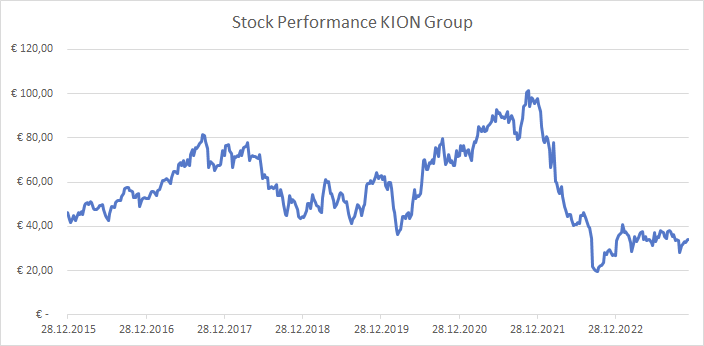
Since peaking towards the end of 2021 at around $100, KION's stock has significantly declined. This decrease is mainly attributed to its weak performance in the fiscal year 2022. Presently, the stock is fluctuating and trading primarily sideways in the range of $30 to $35 per share.
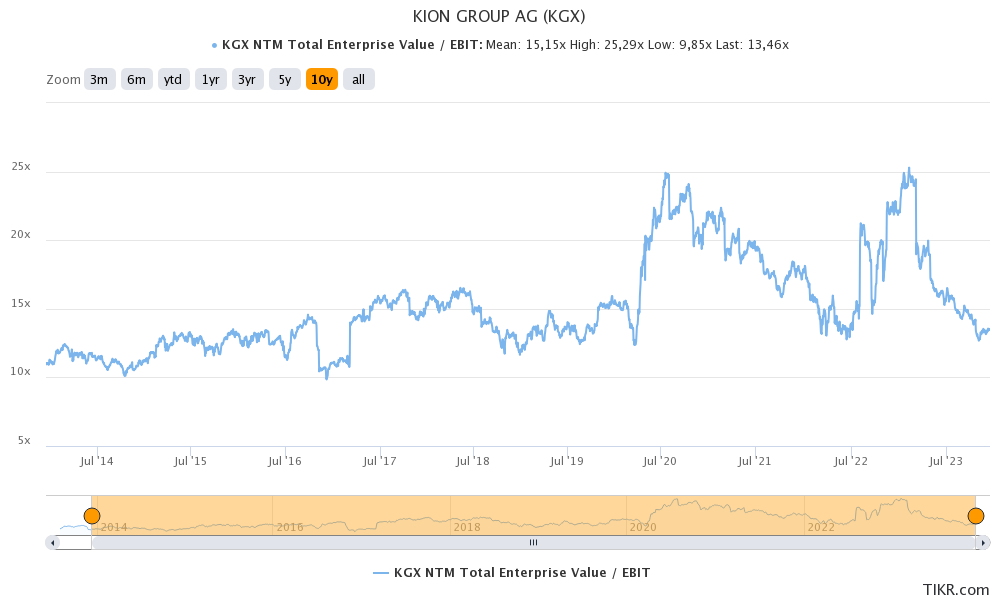
When analyzing the NTM TEV/EBIT multiples of the KION Group, it is evident that they are presently below their 10-year average, with a range of values from 13.46 to 15.15. Notably, this metric has experienced substantial fluctuations since the advent of COVID-19, including significant peaks that raised the average. Nevertheless, in comparison to pre-COVID valuations, the multiples seem to be in greater alignment with historical standards.
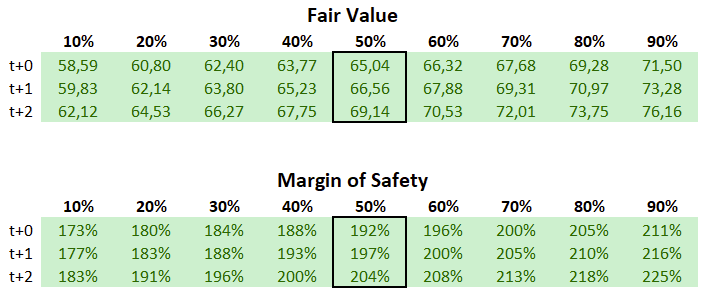
According to my Discounted Cash Flow (DCF) model, which prioritizes normalized long-term earnings over the cycle, the stock is undervalued and presents a significant margin of safety. This conclusion contradicts the results of multiple metrics.
Furthermore, the trend of insider purchasing at KION in the previous 24 months offers further evidence to support my assertion. Such insider transactions frequently represent a powerful indication of the company's standing and expected performance, thereby implying a favorable outlook for the equity.
Valeria Jimena Gargiulo (CPSO) made two separate purchases:
On September 5, 2023, she bought 5,900 shares at a price of $39.39 per share, costing a total of approximately $232,380.
On September 1, 2023, she bought 5,000 shares at $37.97 per share, costing around $189,830.
Hasan Dandashly (President SCS) also made two purchases:
On March 16, 2023, he bought 2,300 shares at $29.79 each, with a total cost of about $68,510.
On March 10, 2023, he bought 3,000 shares at $33.79 each, totaling approximately $101,370.
Andreas Ulf Krinninger (President ITS) made two purchases on the same day:
On September 15, 2022, he bought 4,165 shares at $22.86 per share, with each transaction costing around $95,200.
Investment Case for KION
KION Group's rise as an attractive long-term investment stems from its strategic positioning and ability to adapt quickly to global market forces. With a strong history in the industrial trucks sector, the company has made significant progress in the supply chain solutions industry, particularly through its DEMATIC brand, which is renowned for its state-of-the-art automation and efficiency.
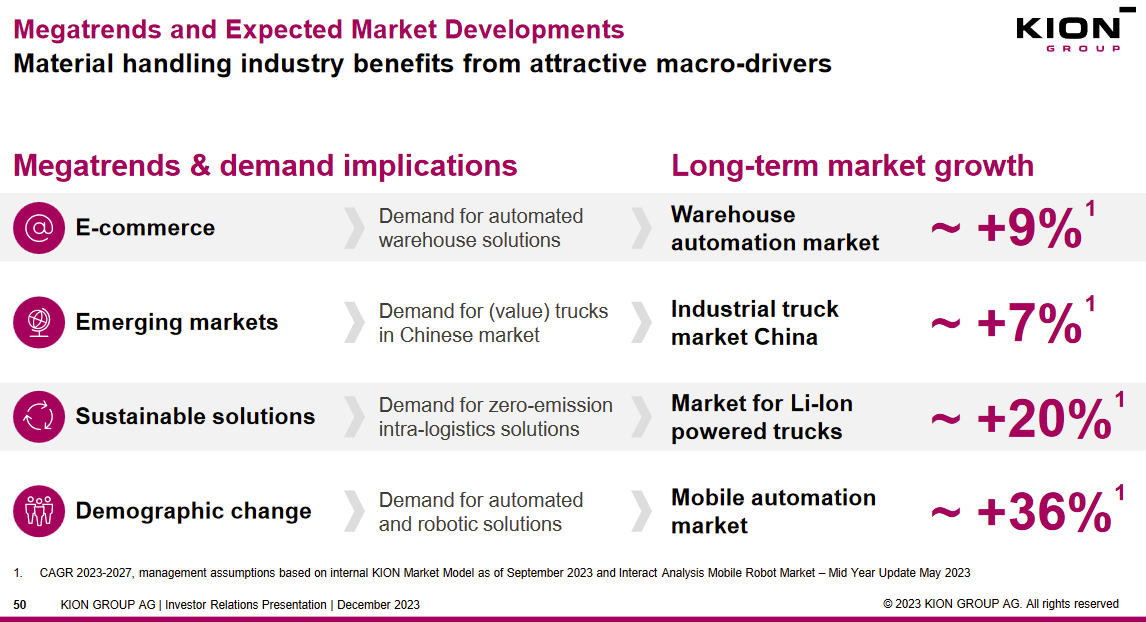
A convergence of major trends is propelling KION's growth trajectory forward. The unprecedented surge of e-commerce, with its insatiable need for accelerated, streamlined, and computerized warehousing solutions, aligns seamlessly with KION's array of services. This trend alone propels the market for warehouse automation towards a projected growth rate of 9%. KION's DEMATIC is poised to take advantage of this trend with its cutting-edge solutions that cater to completely automated warehousing needs, utilizing big data, analytics, and advanced robotics.
The narrative also extends to developing markets, particularly the robust industrial growth in China, which now has the world's largest forklift market. KION isn't just taking part, but leading as the primary foreign player in China, drawing on a lengthy history since 1993. With KION's new plant and R&D center in Jinan, along with a joint venture that secures ample production capacity, the company is well-positioned to capitalize on the rapidly modernizing market that embraces sustainable solutions. Strategic investments like these provide significant potential for future success.
Sustainability is an essential aspect of KION's strategy, rather than just a buzzword. The company is at the forefront of the lithium-ion-powered truck market, which is expected to grow by approximately 20%. KION provides eco-friendly intra-logistics solutions, reflecting their dedication to this area. This effort aligns with their more comprehensive plan to address demographic shifts and the automation industry, predicted to expand by a staggering 36%.
KION is financially sound, as evidenced by their stable order book and diverse revenue streams. The majority of KION's revenue is generated from its business solutions, however, 25% of its revenue is now derived from service-related activities. The majority of KION's revenue is generated from its business solutions, however, 25% of its revenue is now derived from service-related activities. This indicates a move towards stable, recurring sources of income, highlighting KION's ability to adapt amidst challenges. KION's resilience is demonstrated by balancing prompt product sales returns with the long-term dependability of service contracts.
The majority of KION's revenue is generated from its business solutions, however, 25% of its revenue is now derived from service-related activities. The company recognizes that there is a temporary softness in the market due to a decrease in capex following the pandemic-induced surge. Nonetheless, KION's strengths are exemplified in such challenges – a robust service business that flourishes on resilience, strategic investments that predict and mold market trends, and a steadfast commitment to innovation.
In essence, KION Group's narrative exemplifies a company proactively embracing change as opposed to reactively adapting to it, actively pursuing a future where automation, efficiency, and sustainability are not merely aspirational ideals but essential components of leading the market. Astute investors recognize KION as more than a brief snapshot of present prosperity, but rather a portrait of limitless prospects.
Conclusion
After conducting extensive analysis, it is evident that KION Group is a model of industrial resilience and strategic foresight. Despite market fluctuations and global economic challenges, KION not only persevered but is also setting the stage for a strong recovery. KION's dedication to innovation is apparent through its increased spending on research and development and capital expenditure, which places the company in a favorable position for future growth. Despite its conservative capital allocation approach, which includes a disciplined dividend policy that aims to promote financial stability and long-term value creation, a closer look at KION's stock reveals that the company's intrinsic value--as calculated according to our DCF model--remains significantly undervalued despite recent downturns.
Despite its conservative capital allocation approach, which includes a disciplined dividend policy that aims to promote financial stability and long-term value creation, a closer look at KION's stock reveals that the company's intrinsic value--as calculated according to our DCF model--remains significantly undervalued despite recent downturns. For savvy investors seeking a substantial margin of safety, KION presents an opportunity that cannot be ignored. Recent insider transactions support the undervalued stock narrative, demonstrating confidence in KION Group's growth potential.
In conclusion, KION Group presents itself not only as an investment opportunity but also as a testament to sustainable growth, strategic agility, and enduring value. With its strong market position, strategic vision, and solid financial footing, KION is well-prepared to navigate the future and deliver on its commitment to long-term shareholder value. For investors seeking substance over fleeting trends, KION presents a compelling opportunity in the industrial sector.
Disclaimer: The information provided in this publication is for educational and informational purposes only and does not constitute financial advice. The content is solely reflective of my personal views and opinions based on my research and is not intended to be used as a basis for investment decisions. While every effort is made to ensure that the information is accurate and up-to-date, the writer makes no representations as to the accuracy, completeness, suitability, or validity of any information in this post and will not be liable for any errors, omissions, or delays in this information or any losses, injuries, or damages arising from its display or use. All readers are advised to conduct their own independent research or consult a professional financial advisor before making any investment decisions. The author is invested in this stock.